
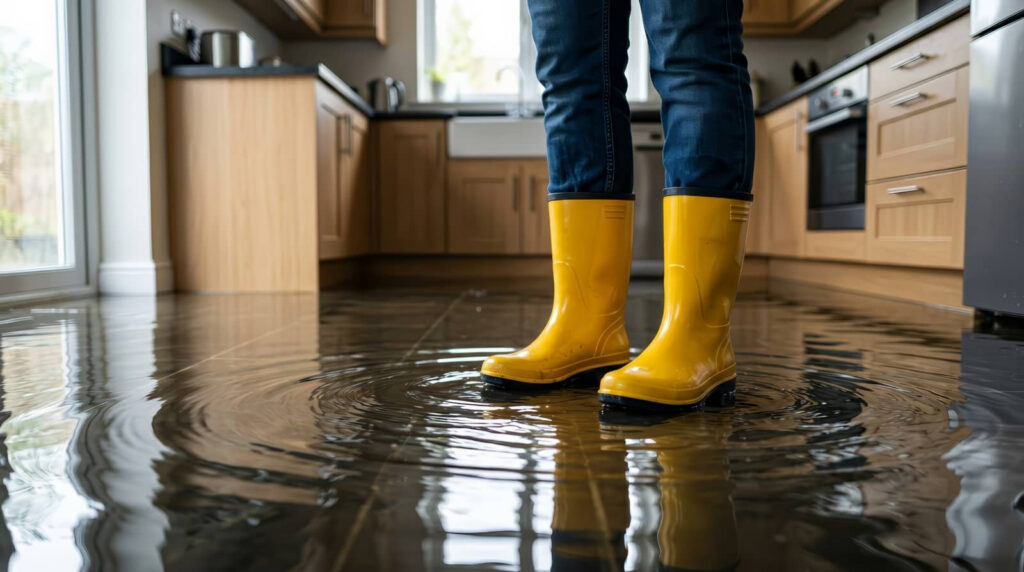
When you find standing water in your basement, you need to act fast because moisture can spread into framing, insulation, and flooring within hours. You should shut off power, identify the entry point, and remove the water with the right equipment before damage gets worse. But extraction is only part of the job, and if you miss the next steps, hidden problems can keep developing out of sight.
Key Takeaways
- Shut off the main water and power first to prevent further flooding and electrical hazards.
- Identify the water source by checking pipes, window wells, cracks, gutters, and sump pump function.
- Remove standing water with a submersible pump or wet/dry vacuum, directing discharge away from the foundation.
- Dry the basement quickly using air movers, dehumidifiers, ventilation, and HEPA air purification.
- Seal leaks, extend downspouts, maintain gutters, and call a waterproofing professional if seepage continues.
Why Basement Standing Water Needs Fast Action
When water sits in a basement after heavy rain, sump pump failure, seepage, or a plumbing leak, you need to act fast because the damage escalates quickly.
Standing water removal from basement spaces matters because moisture migrates into drywall, insulation, framing, and concrete pores, raising humidity and weakening materials.
Within hours, you can see staining, swelling, and slippery surfaces; within days, mold growth and odors can spread through your home.
Fast extraction also limits corrosion on metal fixtures and helps protect stored belongings.
You’re not alone in this problem—many homeowners face it after storms or equipment failure.
Treat the area as urgent, document conditions for cleanup planning, and start drying immediately so you can reduce structural damage, salvage more materials, and restore a safer living space.
Shut Off Water and Power Safely
Before you enter the basement, locate the main water valve and shut it off to stop additional flooding from supply lines or a plumbing leak.
Then turn off power to the basement at the main breaker or the affected circuit, and never touch electrical equipment if water’s already reached outlets, cords, or appliances.
If you can’t access the panel safely, call a licensed electrician or your utility company before you proceed.
Locate Main Water Valve
Start by locating your main water shutoff valve so you can stop additional flooding from a plumbing leak or burst line. Check near the water meter, where the main line enters the basement, or along the foundation wall.
You may find a wheel handle or a lever-style ball valve. If it’s a wheel, turn it clockwise until it stops. If it’s a lever, rotate it a quarter turn so it sits perpendicular to the pipe.
Test nearby fixtures briefly to confirm flow has stopped, then label the valve for future access. If you share the home, make sure everyone knows its location and how to use it.
In an emergency, fast action helps your group protect the basement, reduce damage, and regain control together.
Turn Off Basement Power
Next, shut off basement power if water has reached outlets, appliances, or any wiring. Go to your main electrical panel, not the damp area, and switch off the basement circuit first; if you can’t identify it, shut off the main breaker.
Wear dry shoes, stand on a dry surface, and use one hand when possible. Never touch wet switches, cords, or extension leads.
If you smell burning, hear buzzing, or see sparking, leave the area and call an electrician.
After power’s off, keep everyone out until a licensed pro confirms the system’s safe. This step protects your crew, limits shock risk, and helps your basement recovery move forward with confidence and control.
Find the Source of Basement Water
Pinpointing the source of basement water is the first step in stopping further damage, because the fix depends on whether the problem comes from heavy rain, sump pump failure, foundation seepage, or a plumbing leak.
You should inspect walls, floor joints, window wells, and pipe runs for active drips, wet trails, stains, or mineral deposits. Check whether water appears after storms or during appliance use, since timing helps isolate the entry point.
Look for cracks, failed caulk, clogged gutters, and downspout discharge near the foundation. Test the sump pump float and discharge line if your system relies on one.
When you compare these clues, you can act with confidence, protect your home, and feel like you’re handling the problem with a capable team mindset.
Remove Basement Standing Water Safely
Before you remove basement standing water, shut off power to the affected area at the main breaker if water has reached outlets, cords, or appliances, because electrified water is a serious shock hazard.
Put on waterproof boots, gloves, and eye protection, then test the floor for hidden debris.
Use a submersible pump or wet/dry vacuum to pull water down gradually, especially if the flooding is deep; rapid removal can stress walls and floors.
Route discharge hose water outdoors, away from the foundation and shared walkways.
If the water may contain sewage, fuel, or chemicals, don’t wade in—call a pro.
Work in pairs when possible, and keep kids and pets clear.
Check the area often so you’re part of a careful, safe cleanup team.
Dry Basement Floors, Walls, and Air
After you remove standing water, you need to dry the basement floor fast with squeegees, wet vacuums, and high-velocity air movers to reduce moisture trapped in concrete and seams.
You should control wall moisture by opening vapor barriers, running dehumidifiers, and checking for seepage or wicking that can keep framing and masonry damp.
To improve air quality, you’ll want to ventilate the space, filter airborne spores and dust, and hold indoor humidity low enough to limit mold growth and musty odors.
Floor Drying Methods
Once standing water is out, you need to dry the basement floor, walls, and air fast to prevent mold growth, material damage, and lingering moisture.
You should start with a wet/dry vacuum or squeegee to pull residual water from concrete, tile, or sealed flooring, then run high-velocity air movers low and angled across the surface.
Open windows only if outside air is drier than inside; otherwise, keep the space closed and use a dehumidifier sized for the room.
Lift rugs, cardboard, and anything porous that traps moisture. Check subfloor edges, baseboards, and joints with your hand or a moisture meter.
Keep fans and dehumidifiers running continuously until readings stabilize and surfaces feel dry.
Work methodically, and you’ll help protect your basement crew, your belongings, and your home.
Wall Moisture Control
As the floor dries, you should also control wall moisture so trapped dampness doesn’t keep feeding mold, odor, and material decay.
Start by pulling storage a few inches away, then inspect concrete, block, and framing for dark lines, peeling paint, or salt deposits that signal seepage.
Wipe wet surfaces with absorbent towels, then run a dehumidifier near the dampest wall and keep interior doors open so air can circulate.
If you see hairline cracks, seal them after the wall is fully dry.
For masonry, use a brush-on waterproofing coating where needed; for framed walls, remove soaked insulation only if it stays wet.
Check window wells, downspouts, and grading outside too, because your basement team works best when the source is controlled.
Air Quality Improvement
When damp basement surfaces start drying, you still need to clean up the air itself because moisture, spores, and musty odors can linger long after the visible water is gone.
You should run a dehumidifier continuously until relative humidity stays near 50-60%. Open windows only if outdoor air is drier than basement air, and use exhaust fans to pull stale air out.
Replace wet HVAC filters, and don’t circulate basement air through the whole house until cleanup ends. If you can, place a HEPA air purifier in the room to capture fine particles stirred up during drying.
Check for hidden pockets behind walls and under stairs, because trapped dampness feeds odor and mold.
Stop Mold and Inspect for Hidden Damage
Act quickly to stop mold growth and uncover hidden damage after basement water intrusion. You need to remove damp materials, open wall cavities, and dry framing before spores colonize.
Wear gloves, eye protection, and an N95 respirator while you inspect. Check drywall seams, baseboards, insulation, carpet padding, and subfloors for swelling, staining, or a musty odor.
Use a moisture meter to compare affected areas with dry sections, and probe wood for softness or delamination. If you spot rusted fasteners, warped trim, or peeling paint, document them and isolate the area.
Clean nonporous surfaces with detergent and dry them fully. When you catch problems early, you protect your home and keep your household in the loop, working together with confidence and control.
Prevent Future Basement Flooding
Once you’ve stopped mold and cleared hidden damage, focus on the source of the water so the basement stays dry. You can protect your space with a system that works for your home and your crew of neighbors and family:
Extend downspouts 6 to 10 feet from the foundation.
Seal wall cracks, pipe penetrations, and floor joints with hydraulic cement.
Test your sump pump monthly and add a battery backup.
Grade soil away from the house and keep gutters clear.
After storms, inspect the perimeter, check drain tiles, and run a dehumidifier to control humidity.
If seepage keeps returning, call a waterproofing professional to evaluate exterior membranes, interior drains, and pump capacity.
Consistent maintenance keeps your basement ready, dry, and welcoming for everyone.
Frequently Asked Questions
How Long Can Standing Water Stay Before Damage Gets Worse?
You shouldn’t wait more than 24 hours; damage can worsen fast as water soaks materials, promotes mold, and corrodes metal. You’ll limit costly repairs by removing it immediately and drying surfaces thoroughly.
Should I Call My Insurance Company Before Cleanup Starts?
Yes—call your insurer first; many policies require prompt notice. About 1 in 50 homeowners files a water-damage claim yearly, so you’ll protect coverage, document losses, and coordinate cleanup without risking reimbursement delays.
What Tools Remove Water Fastest From a Basement?
You’ll remove water fastest with a submersible utility pump, wet/dry vacuum, and high-capacity squeegees. You can pair them with buckets, hoses, and fans to move water quickly, lower moisture, and protect your basement.
Can Basement Drains Back up During Heavy Rain?
Yes, basement drains can back up during heavy rain when storm sewers overload or your drain line can’t keep up. You’ll want to check for blockages, install backwater valves, and clear runoff paths fast.
When Should a Professional Water Removal Service Be Called?
Call a professional service immediately when water covers floors, keeps returning, or follows sewage, storm surge, or pump failure; many claims involve water damage, and you’ll protect your home and your people fast.
Wrap-Up
So, when your basement decides to audition as an indoor pond, you don’t admire the reflection— you act. Shut off power, find the leak, and remove the water fast with a pump or wet/dry vac. Then dry everything like you mean it, because mold loves a damp sequel. Inspect hidden damage, fix the source, and keep drainage in line. Do that, and your basement won’t keep practicing its little flood routine.