
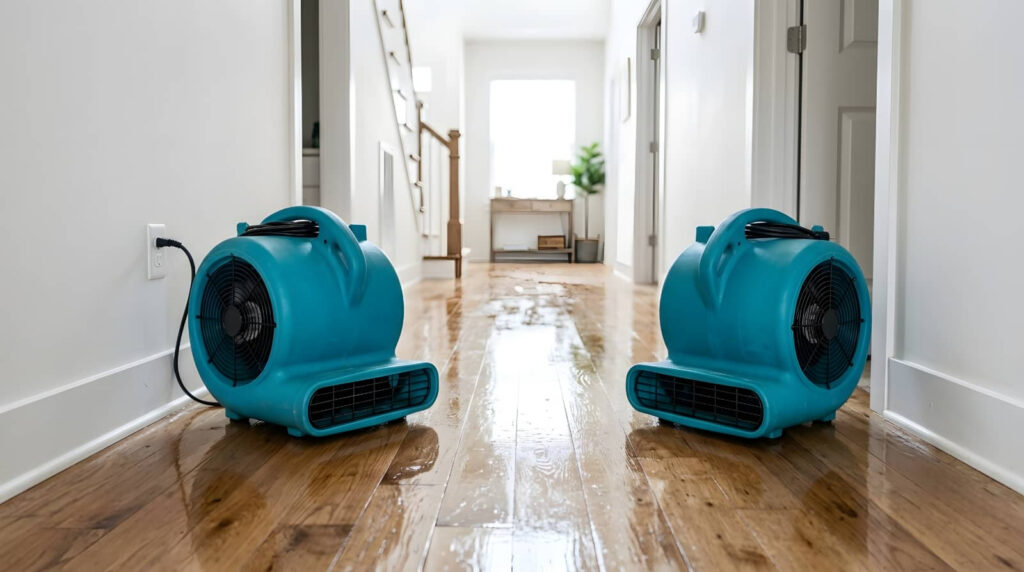
If a burst pipe floods your kitchen at 2 a.m., you’ve got minutes to limit the damage. Emergency water removal should begin by shutting off the water and power, then moving people and valuables out of the wet area. After that, document the loss and start removing standing water as quickly as possible. The real issue is how fast you can dry the space before hidden moisture spreads further and creates additional damage.
Key Takeaways
- Shut off the water source immediately to stop further spreading.
- Cut power to affected areas and avoid wet electrical panels or cords.
- Move people, pets, and valuables out of the flood zone right away.
- Remove standing water fast with towels, a wet vac, or a pump.
- Dry wet areas quickly and call a pro if water reaches outlets or stays wet.
What to Do in the First 10 Minutes
In the first 10 minutes, act fast: shut off the water source if you can do so safely, cut power to affected areas, and move people, pets, and valuables out of the flood zone.
Then document the scene with quick photos for your claim and for the crew you’ll call. Use towels, mops, or a wet vac to remove shallow water, but don’t spread it into dry rooms.
Open interior doors to improve airflow and keep foot traffic low. If you see contaminated water, ceiling sagging, or fast-rising flow, leave and call emergency water removal pros right away.
Your priority is safety, quick containment, and preserving materials. You’re not dealing with this alone; a calm, organized response helps your home recover sooner and keeps your team on track.
Shut Off the Water and Power
First, shut off the water at the main valve or the nearest supply valve to stop additional flooding, then cut power to affected areas at the breaker if water has reached outlets, appliances, or standing floor space.
If you can’t find the main shutoff quickly, learn its location now so you’re ready next time. Use caution around wet panels, cords, and metal fixtures; if the breaker box is unsafe, call an electrician or utility provider.
You’re protecting your home and your crew by isolating the source before the damage grows. Keep everyone out of the affected zone until the area is de-energized and the water supply is secure.
This step buys you time, reduces risk, and helps the rest of your response go smoother.
How to Remove Standing Water Fast
Get the standing water out as quickly as possible with a wet/dry vacuum, submersible pump, mop, or towels, depending on the depth and area affected.
Work from the outer edges toward the center so you don’t push water deeper into the space. Empty recovery containers often and keep suction steady.
If the water is shallow, wring towels into a bucket and replace them as soon as they’re saturated. For larger volumes, set a pump in the lowest point and discharge outside, away from the foundation.
Move quickly, but don’t use regular household vacuums or extension cords in wet areas. Wear boots and gloves, and watch for hidden hazards under the water.
If the flooding keeps rising or the source isn’t controlled, call a water removal pro now.
How to Dry Walls, Floors, and Furniture
Once the standing water is gone, start drying walls, floors, and furniture immediately to limit swelling, warping, and mold growth.
You should open windows if outdoor air is dry, then run fans to move air across wet surfaces. Remove baseboards and lift carpets so hidden moisture can escape.
Wipe hard floors with clean towels, then dry seams and edges carefully. For drywall, inspect for softness and blot surface water; keep air moving at the wall base.
On furniture, remove cushions, separate parts, and dry each piece on all sides. Don’t stack damp items.
Rotate items often and check progress with your hand. Keep the area clear so your crew can work safely and you can stay focused on recovery together.
When to Call a Water Removal Pro
If the drying steps aren’t enough to control the damage, call a water removal pro right away. You need help when water keeps spreading, walls feel soft, or odors turn musty.
Pros bring extraction pumps, moisture meters, and dehumidifiers that you likely don’t have. They also track hidden damage behind baseboards, cabinets, and subfloors, so your team can act before mold starts.
- Water reaches outlets or the electrical panel.
- Sewage, floodwater, or contaminated water enters the space.
- Materials stay wet after 24 hours.
- Structural sagging, warping, or peeling paint appears.
You’re not overreacting; you’re protecting your home and the people in it. Fast response keeps cleanup efficient, limits repairs, and helps your household get back to normal sooner.
Frequently Asked Questions
Can Emergency Water Removal Prevent Mold Growth?
Yes, emergency water removal can help prevent mold growth if you act fast. You’ll reduce moisture, limit microbial spread, and protect materials. Dry surfaces within 24 to 48 hours, and call professionals when flooding’s significant.
What Causes Hidden Water Damage Behind Walls?
Leaks, bursts, and capillary wicking hide water behind walls; you see dry paint, yet moisture spreads. You’ll face warped framing, corrosion, insulation saturation, and mold when plumbing, roofs, windows, or seals fail unnoticed.
How Much Does Professional Water Removal Cost?
Professional water removal usually costs $1,000 to $4,000, depending on damage size, water type, and drying needs. You’ll pay less for minor spills and more for sewage, mold risk, or structural drying.
Does Homeowners Insurance Cover Water Extraction?
Usually, you’re covered if a sudden, accidental event caused the water, like a burst pipe. You’ll need to file fast, document damage, and check exclusions for floods, sewer backups, or neglect.
Can Sewage Water Be Removed Safely by Homeowners?
No, you shouldn’t remove sewage water yourself; you’ll expose yourself to pathogens and contaminated surfaces. You should isolate the area, shut off power, and call certified professionals with protective gear, disinfectants, and extraction equipment.
Conclusion
When water starts spreading fast, you’ve gotta act fast. Shut off the source, cut power, and clear the area before you tackle the standing water. Use towels, a wet/dry vac, and steady, systematic strokes to speed up surface drying. Keep an eye on walls, floors, and furniture for hidden moisture. If the water’s dirty, deep, or won’t stop, call a pro. Quick, calm, careful action cuts damage and saves your space.