
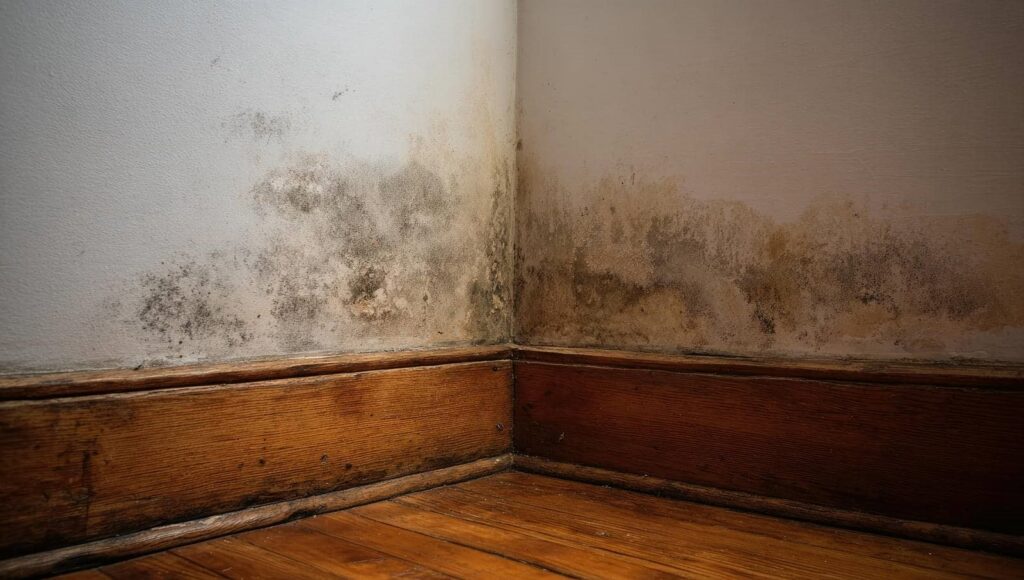
After a moisture event, you need to stop the source, remove standing water, and start drying immediately. Inspect walls, flooring, and hidden cavities for trapped moisture, because mold can begin quickly when humidity stays high. Remove wet materials that won’t dry fast, then clean affected surfaces and run fans and dehumidifiers correctly. Watch for odor, staining, or growth, since the next steps can determine whether the damage stays contained.
Key Takeaways
- Stop the leak immediately, remove standing water, and document all affected areas with photos.
- Open cabinets, baseboards, and cavities, then use fans and dehumidifiers to keep humidity below 60%.
- Remove unsalvageable wet porous materials, clean remaining surfaces, and wear proper PPE during cleanup.
- Inspect for hidden moisture with a moisture meter, especially around outlets, windows, plumbing, and exterior corners.
- Fix the moisture source, improve drainage and ventilation, and monitor for musty odors or mold growth.
What to Do After Water Damage
After water damage, act quickly to limit moisture intrusion and reduce the chance of mold growth. You should assess affected rooms, identify wet materials, and document the condition with photos for your records and claims.
Remove standing water if it’s safe, then separate salvageable items from porous materials that may need disposal. Open accessible cavities, cabinets, and baseboards to expose hidden moisture. Bag contaminated debris and keep traffic low to avoid spreading spores.
Use water damage and mold prevention principles by cleaning hard surfaces with detergent, then sanitizing as appropriate. Maintain indoor humidity below 60% and verify drying with a moisture meter.
If you smell musty odors or see staining, involve a qualified remediation pro so your team stays protected and the space returns to normal safely.
Stop the Leak and Dry Fast
First, you need to stop the leak at its source by shutting off water, isolating the failed line, or calling a plumber if you can’t safely complete the repair.
Then remove standing water and dry wet materials immediately using ventilation, dehumidification, and, if needed, targeted heat. The faster you reduce moisture in building materials, the lower your risk of hidden damage and mold growth.
Stop The Leak
Stop the leak as soon as you can, then start drying the area right away to limit moisture intrusion and mold growth. You need to isolate the source, shut off the valve, patch the failed line, or call a licensed plumber if the problem’s beyond your tools.
If rain or groundwater entered, seal the opening and divert runoff so it doesn’t keep feeding the wet zone. Turn off affected circuits only if it’s safe, and keep people out of the area until the source is controlled.
When you act quickly, you protect your home and your crew from avoidable damage. Document the leak location, time, and repairs so you can track progress and support next steps.
Once the source is stopped, you’re ready to move into drying without adding more moisture.
Dry Wet Materials
Get wet materials drying immediately once the leak is controlled, because fast moisture removal reduces swelling, staining, and mold growth.
Remove standing water with pumps, wet vacs, and absorbent pads, then increase airflow with fans aimed across surfaces, not directly at walls.
Run dehumidifiers to pull vapor from the air and keep indoor humidity below 60 percent.
Lift carpets, separate padding, and open cabinets so hidden cavities can dry.
For drywall, insulation, ceiling tiles, and particleboard, inspect closely; if they stay saturated or show distortion, discard them.
You’re not dealing with this alone—your drying crew can track moisture readings and verify progress.
Keep materials clean, ventilated, and monitored until they reach normal dry levels, because incomplete drying invites secondary damage and mold.
Inspect Walls for Hidden Moisture
Check walls for hidden moisture after any leak, flood, or incomplete drying, because damp framing and drywall can keep feeding mold growth even when the surface looks dry.
You’ll protect your space by testing suspect areas, not guessing. Use these steps to confirm hidden wetness:
- Feel for cool spots, soft drywall, or swollen trim.
- Use a moisture meter on baseboards, studs, and wall cavities.
- Check around outlets, windows, plumbing lines, and exterior corners.
- Mark wet zones so your team can track drying progress.
If readings stay high, keep monitoring until levels normalize.
Good inspection helps you stay ahead of mold and keeps your home safer for everyone. Together, you can spot trouble early and prevent bigger remediation costs.
Remove Wet Materials Before Mold
You should remove wet materials right away to stop mold from colonizing damp surfaces.
Discard unsalvageable porous items such as soaked drywall, insulation, carpet, and ceiling tiles because they can hold moisture and support growth.
Keep only materials you can fully dry and clean, and isolate them from affected areas until remediation is complete.
Prompt Removal of Wet Materials
Swift removal of wet materials helps stop mold before it starts. You need to act within hours, not days, after a leak, spill, or flood.
Remove soaked textiles, paper goods, and movable furnishings from the affected area so drying can begin. Keep pathways clear, and work with your team to separate wet items from dry ones. Use gloves and proper PPE to prevent contamination and protect your space.
- Lift wet materials off floors and away from walls.
- Move items to a dry, ventilated location.
- Sort and stage materials for rapid drying.
- Document what you removed and where it came from.
When you respond quickly, you reduce moisture load, limit microbial growth, and support a safer, faster recovery for everyone involved.
Discard Unsalvageable Porous Items
Some porous materials can’t be safely dried or restored after water exposure, so they need immediate disposal to prevent mold growth. You should remove saturated drywall, insulation, ceiling tiles, carpet pad, and particleboard as soon as you can.
Bag each item, seal it, and carry it out without dragging debris through clean areas. Wear gloves, an N95 respirator, and eye protection so you stay protected while you work alongside your team or household.
Check framing and subfloors for hidden moisture, but don’t keep salvageable and unsalvageable materials in the same stack. If a porous item still smells musty, stays damp, or breaks apart, discard it.
Your quick, coordinated cleanup helps the space dry faster and keeps mold from getting established.
Clean Water-Damaged Surfaces
After the area has dried enough for safe access, clean water-damaged surfaces with soap and water to remove dirt, residue, and early mold growth. You’ll protect your space by scrubbing hard, nonporous materials right away and rinsing them well. Use clean cloths, fresh water, and a detergent that won’t leave film.
Remove loose debris first.
Wash walls, counters, and floors methodically.
Rinse surfaces so no cleaner remains.
Dry each area completely before reuse.
If staining, swelling, or softening persists, treat the material as compromised and keep it out of service.
Work in small sections so you don’t miss hidden contamination. When you clean carefully, you help your home stay healthier, and you’re part of the group that acts early and prevents bigger repairs.
Use Fans and Dehumidifiers Properly
Once surfaces are clean, use fans and dehumidifiers to pull remaining moisture out of the space.
Place fans so they move air across damp materials and toward exits, not directly into wet pockets.
Run dehumidifiers in the smallest practical area with doors and windows closed so they can lower humidity efficiently.
Empty or drain them often, and clean filters so airflow stays strong.
Keep equipment operating continuously until materials feel dry and indoor humidity returns to a safe level.
If you’re drying multiple rooms, rotate units to cover each zone.
You’re not just drying a room—you’re protecting your home and everyone in it from lingering moisture.
Check equipment daily for steady performance, and keep electrical cords clear of wet areas.
Check for Mold Warning Signs
Watch for mold warning signs as you dry the area, because early detection can stop a small moisture problem from becoming a larger remediation job. You’re part of a team that can catch changes fast, so inspect materials daily and trust your senses.
Look for discoloration, fuzzy growth, or slimy film on drywall, wood, and insulation.
Smell for a persistent musty odor that stays after visible water’s gone.
Check for peeling paint, swollen trim, or soft spots that suggest trapped moisture.
Note worsening symptoms like coughing, sneezing, or eye irritation during cleanup.
If you see these indicators, isolate the area and document what you find.
Don’t scrub suspected mold dry; that can spread spores. Keep monitoring until surfaces are fully dry and stable.
Prevent Future Water Damage
To reduce the chance of another moisture problem, you need to find and fix the source before you restore finishes or store belongings.
Inspect roofs, flashing, gutters, downspouts, grading, plumbing lines, supply valves, drains, and appliance connections. Repair leaks, replace failed seals, and reroute runoff away from the structure.
You should also verify that sump pumps, backflow devices, and ventilation fans work correctly. If water intrusion came through walls or floors, open assemblies and dry hidden cavities fully before closing them.
Keep indoor humidity below 60%, and use dehumidifiers where needed. After repairs, document conditions with photos and dates so you can track changes.
When you act early and stay consistent, you protect your space and support everyone who shares it.
Frequently Asked Questions
How Long Does Mold Start Growing After Water Exposure?
Mold can start growing within 24 to 48 hours after water exposure. You should dry materials fast, lower humidity, and remove wet items promptly to stop spores from colonizing and spreading.
Can Hidden Moisture Remain Behind Tile or Wallpaper?
Yes, you can have hidden moisture behind tile or wallpaper, and it often lingers in adhesive, grout, or drywall. You’ll need targeted inspection, drying, and removal of compromised materials to stop mold and decay.
Are Air Purifiers Helpful After a Water Damage Event?
Yes, but they’re only one piece of the fix. You should dry materials, remove wet contents, and ventilate well; HEPA purifiers can cut airborne spores and odors, yet they won’t stop hidden moisture or growth.
Should Insurance Cover Mold Prevention and Cleanup Costs?
Yes, you should expect your policy to cover mold prevention and cleanup if the cause is sudden, covered damage. You’ll need to document moisture, act fast, and work closely with your insurer and remediator.
When Should I Call a Professional Mold Inspector?
You should call a professional mold inspector if you smell musty odors, see visible growth, or moisture lasts over 24–48 hours. Many homes with leaks develop hidden mold, so you’ll want testing fast.
Review
After water damage, you need to act fast to limit mold growth. Drying wet materials within 24 to 48 hours can greatly reduce risk, especially since mold can begin colonizing in as little as 24 hours under damp conditions. Keep indoor humidity below 60%, inspect hidden cavities for moisture, and remove materials that stay wet. If you spot musty odors or discoloration, don’t wait—clean, dry, and remediate immediately to protect both the structure and your health.