
Key Takeaways
- Stop water entry, shut off power to affected circuits, and use a flashlight and insulated boots for safe access.
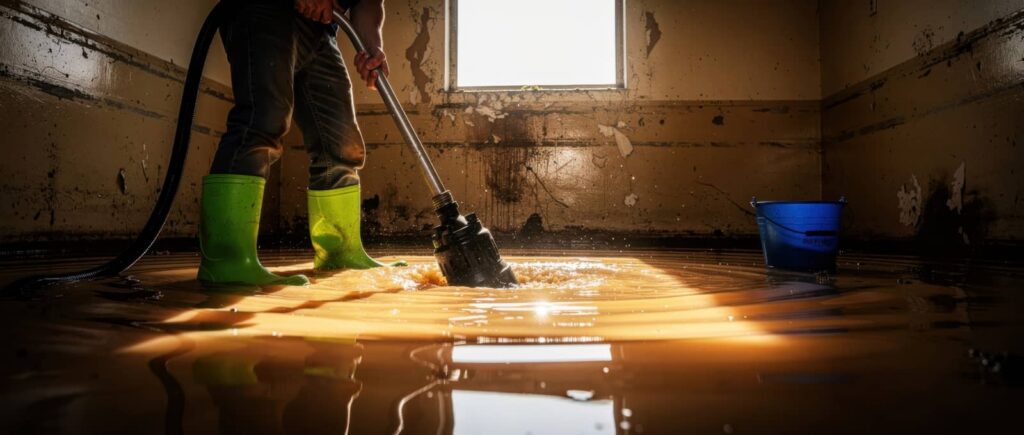
- Remove standing water quickly with a submersible pump or wet/dry vacuum, directing discharge away from the foundation.
- Ventilate the basement, run fans and dehumidifiers, and monitor moisture to prevent swelling, warping, and mold growth.
- Remove contaminated porous materials like insulation, drywall, and ruined cardboard, then bag debris to prevent spreading bacteria.
- Clean hard surfaces with detergent, then disinfect with an EPA-registered product and inspect utilities for water damage.
Stop the Water and Kill the Power First
The first step is to stop more water from entering the basement and shut off power to the affected area right away.
If you can reach the discharge line safely, check for a blockage or disconnected section and isolate the water source. You’ll protect yourself and your home by keeping clear of standing water until the circuit is de-energized at the breaker panel.
Use a flashlight, not a plug-in light, and wear insulated boots if you must move through the space.
In sump pump failure flood cleanup, this immediate shutdown limits shock risk, slows damage to flooring and wall systems, and gives your crew room to work.
You’re not handling this alone; taking these first control steps sets up a safer, more effective recovery for everyone involved.
Spot Common Sump Pump Failure Signs
When a sump pump starts to fail, you’ll usually notice warning signs before the basement fully floods. You can catch trouble early by listening, looking, and checking how the system behaves during rain.
A healthy pump should cycle smoothly, discharge water quickly, and stay relatively quiet. If you notice irregular performance, you’re not alone—these issues are common and fixable when you act fast.
- Repeated short cycling or nonstop running
- Grinding, rattling, or humming noises
- Visible rust, debris, or a stuck float switch
- Strong vibrations or uneven startup
- Water in the basin without proper discharge
If you spot any of these signs, treat the pump as unreliable and prepare for cleanup support.
Remove Standing Water From the Basement
Start by getting the standing water out as safely and quickly as possible, because every extra hour increases the risk of structural damage, mold growth, and electrical hazards.
If you can reach the basement safely, shut off power to affected circuits first, then use a submersible pump, wet/dry vacuum, or utility pump to lower the water level.
Keep the discharge hose routed outside and away from the foundation so you don’t send water back in. Work in sections if the depth is uneven, and monitor the pump so it doesn’t run dry or clog.
If the water is deep, contaminated, or rising, call a water cleanup team right away. You’re not handling this alone; fast, controlled removal helps protect your basement and gives your home the best chance of recovery.
Save Flooring and Trim Quickly
Remove standing water immediately so moisture can’t keep wicking into flooring, subfloor, and trim.
Pull back baseboards or protect trim boards with plastic and spacers if they’re still dry, and start air movement at floor level right away.
Use extractors, fans, and dehumidifiers to dry floors fast, because quick moisture removal helps prevent swelling, delamination, and permanent warping.
Remove Standing Water
Fast action matters once sump pump failure leaves water pooling in the basement, because the longer it sits, the more likely it’s to wick into flooring, swell trim, and reach wall bases.
You should start extraction right away with a wet vac, pump, or professional water mover, working from the lowest point outward. Keep your path clear so you can move safely and avoid spreading moisture.
- Pull visible water first
- Work in overlapping passes
- Empty the machine often
- Check corners and seams
- Reinspect after each round
You’ll help your basement team stay ahead of hidden seepage when you keep removing water until surfaces feel damp, not slick.
That quick rhythm protects the finish and gives the space a better recovery window.
Protect Trim Boards
As water recedes, you’ll want to protect trim boards right away, because they can wick moisture up from the floor and transfer damage into baseboards, door casings, and finish edges.
Pull away loose quarter-round, shoe molding, and any swollen trim that’s already separated. If panels are still sound, dry the exposed bottoms and place thin spacers to reduce contact with damp flooring.
You should also check for trapped water behind trim at seams and corners, where swelling starts first. Keep fasteners, removed pieces, and labels together so you can reinstall them in the same locations.
Work methodically around the room, and you’ll limit hidden damage while keeping the basement’s finished details intact. This quick, careful step helps your space recover cleanly and stay structurally stable.
Dry Floors Fast
Get drying equipment running immediately so standing moisture doesn’t keep soaking into flooring, trim, and underlayment.
You should place air movers low and aim them along baseboards, seams, and carpet edges to speed evaporation. Use dehumidifiers in the same room to pull humid air out before it migrates deeper.
If you have carpet, lift corners and insert drying pads or vented mats to protect the cushion. Remove area rugs, furniture, and soaked pads right away.
- Open cavities behind trim
- Check moisture in subflooring
- Swap saturated filters
- Monitor daily with meters
- Document drying progress
When you act fast, you help your crew stay ahead of swelling, cupping, and odor, and you keep your basement recovery on track.
Protect Furniture and Stored Items
If the water is still rising, move furniture and stored items out of the basement immediately, starting with anything porous, valuable, or difficult to dry.
You should work in pairs when possible, so you can lift safely and keep items from scraping against wet flooring or walls. Set pieces on dry upper levels, pallets, or plastic sheeting to keep them separated from damp concrete.
Remove cushions, drawers, rugs, books, and electronics first, since they trap water and add weight fast. Label boxes and take quick photos before relocating them, so you can track what belongs where and share a clear record with your crew.
If an item is too heavy, unstable, or already saturated, don’t force it; isolate it, protect nearby belongings, and keep moving with your team.
Dry Out the Basement Before Mold Starts
Once standing water is removed, you need to dry the basement fast to stop mold from taking hold. You should run fans to move air across wet surfaces, and place a dehumidifier in the center of the room. Keep interior doors open so airflow reaches every corner.
Pull damp rugs, padding, and cardboard out right away, because they trap moisture. Monitor humidity and aim for below 50% until materials feel dry. If you belong to a finished-basement community, you know speed matters.
- Direct airflow along walls
- Empty wet bins and boxes
- Lift baseboards if needed
- Check hidden corners daily
- Keep the dehumidifier draining
Stay consistent for several days. Dry framing, flooring, and drywall thoroughly so your basement returns to a safe, comfortable space.
Check Your Utilities for Damage
As the basement dries, inspect every utility for signs of water exposure before you restore power or use equipment again.
Check outlets, extension cords, breakers, and exposed wiring for corrosion, discoloration, or tripped protection devices. If you see moisture inside panels, call a licensed electrician and keep clear of the area.
Examine your furnace, water heater, dehumidifier, and any stored appliances for wet controls, damaged insulation, or unusual odors. Shut off gas if you smell a leak, then contact the utility company immediately.
Verify that sump pump components, backup batteries, and discharge lines stayed intact. You’re not handling this alone; a careful check now protects your household, your home systems, and everyone who depends on them.
Take notes and photos for insurance.
Clean and Disinfect Flooded Surfaces
Remove all contaminated debris first, and bag it for disposal so you don’t spread bacteria or mold spores.
Then scrub hard surfaces with detergent and water to lift sludge, residue, and biofilm from floors, walls, and built-ins.
After cleaning, disinfect the affected areas with an appropriate solution and keep the contact time on the label so the surfaces are truly sanitized.
Remove Contaminated Debris
Start by pulling out any debris, wet insulation, ruined cardboard, and other porous materials that soaked up contaminated floodwater, since they can hold bacteria, odors, and hidden moisture. You’re protecting your finished basement’s structure and your crew’s health when you remove these items quickly and bag them for disposal.
Keep a clear path so you can work safely and avoid stirring up settled contaminants.
- Wear gloves, boots, and a fitted mask
- Double-bag small debris before carrying it out
- Separate salvageable items from porous waste
- Check behind baseboards and under stairs
- Ventilate the space as you remove materials
Work methodically, and don’t stack damp debris indoors. If you’re part of a home team, stay aligned on what leaves and what stays.
Scrub Hard Surfaces
Once the debris is out, you can clean and disinfect the hard surfaces that held floodwater, including concrete floors, masonry walls, framing, and any nonporous fixtures.
You should wash each surface with warm water and a heavy-duty detergent, using a stiff brush to lift soil from pores, seams, and corners. Work from the top down so loosened residue doesn’t recoat cleaned areas. Rinse often with clean water and change buckets when they cloud.
Keep ventilation moving to help surfaces dry between passes. Check for trapped mud, efflorescence, and slick residue around joints, then scrub again where needed.
Wear gloves, eye protection, and boots so you can work confidently. When you’re thorough here, you and your basement start rebuilding on a cleaner, safer foundation together.
Disinfect Affected Areas
After the hard surfaces are scrubbed clean, disinfect them with an EPA-registered disinfectant labeled for flood cleanup, following the manufacturer’s dilution, contact time, and safety instructions exactly.
You’ll protect your finished basement from lingering bacteria, mold spores, and sewage residue by treating floors, trim, shelving, and exposed framing.
Keep the area ventilated, wear gloves and eye protection, and never mix chemicals.
Apply the solution evenly, then let it remain wet for the full dwell time so it can work properly.
Rinse only if the label says to, and dispose of contaminated towels and PPE in sealed bags.
- Safer surfaces for your family
- Less odor after sump failure
- Better prep for drying equipment
- Clear guidance on dwell time
- Confidence that you’re doing it right
Decide What to Replace or Restore
When you assess the damage, separate materials you can dry and sanitize from those that have to be removed and replaced. You can usually restore solid wood trim, metal shelving, glass, and sealed concrete if they stayed submerged briefly and you dried them quickly.
Porous items like carpet padding, fiberboard baseboards, insulation, drywall below the flood line, and swollen laminate often can’t return to safe condition. Check each surface for warping, delamination, staining, and persistent odor; those signs usually mean hidden moisture remains.
If you belong to a finished-basement household, it helps to make this call together so everyone understands what’s salvageable. Label keep, repair, and discard items, and photograph damage before disposal. That simple record keeps your cleanup organized and your next steps clear.
Prevent Another Sump Pump Failure
To keep another backup flood from catching you off guard, inspect the sump pump system right away and fix the failure point before you restore the basement.
You should test the float switch, check the discharge line, and verify the check valve seals tightly. If the pump ran dry, replace worn seals and clean debris from the pit.
Install a battery backup or water-powered backup so you’re protected during outages. Add an audible alarm and monitor the system after heavy rain.
- Test pump cycling
- Clear intake screens
- Tighten discharge fittings
- Upgrade backup power
- Schedule annual service
When you maintain these parts, you reduce strain on the system and protect your finished space.
With the right checks, you’ll feel confident your basement is part of a prepared home.
Frequently Asked Questions
How Do I Tell if Floodwater Reached the Electrical Panel?
Check the panel’s lower edge for waterlines, silt, rust, damp drywall, or tripped breakers. You should also smell for moisture and call an electrician before touching it, because hidden damage can’t be safe.
Can I Save Drywall After Sump Pump Flooding?
Yes—you can save drywall if water stayed below 12 inches and you dry it fast. Cut away wet sections, remove insulation, dehumidify, and inspect for mold. If it crumbles or smells musty, replace it.
How Soon Should a Basement Dehumidifier Be Started?
You should start the dehumidifier immediately after you remove standing water, ideally within 24 hours. You’ll lower humidity fast, slow mold growth, and protect materials as your space begins drying.
Do I Need Permits for Replacing Flood-Damaged Basement Materials?
Yes, you might need permits, like reopening a sealed gate in a storm. You should check local codes before replacing framing, drywall, wiring, or plumbing, so you stay compliant, protected, and confidently back in your basement community.
What Backup Systems Prevent Future Sump Pump Failures?
You can prevent future failures with a battery backup pump, water-powered backup, secondary pump, high-water alarm, check valve, and routine testing. You’ll stay protected, confident, and connected to a resilient basement system.
Wrap-Up
If your sump pump fails, move fast: stop the water, cut power, and start extraction right away. About 98% of basements in flooded homes have some kind of damage, so every minute counts. You can protect finishes, reduce mold risk, and preserve more of your finished space by drying, disinfecting, and documenting thoroughly. If you stay methodical, you’ll give your basement the best chance to recover and help prevent the next flood.