
Key Takeaways
- Gather policy details, claim forms, repair estimates, receipts, contractor notes, and insurer communications in one organized file.
- Photograph flood damage with wide shots and close-ups before cleanup, clearly showing damaged areas and water lines.
- Record moisture readings by room, date, and time, and share them with your insurer as supporting evidence.
- Create an itemized inventory of damaged belongings with brand, age, purchase price, condition, and replacement value.
- Save cleanup, temporary living, and repair expense receipts, and submit all documents in dated, labeled claim packets.
Gather Your Flood Claim Documents First
Start by gathering your flood claim documents before you file or follow up with your insurer. You need clear insurance documentation for flood damage so you can support every detail of your claim.
Collect your policy number, claim form, repair estimates, receipts, and contractor notes in one place. Add item lists that identify damaged belongings, dates of purchase, and replacement values.
Include cleanup records, moisture readings, and any written communication with your insurer or adjuster. Keep copies of every document and organize them by category and date.
This approach helps you speak with confidence, stay aligned with your community of policyholders, and avoid delays. When your records are complete, you can respond faster and present a more accurate claim.
Photograph Flood Damage Before Cleaning Up
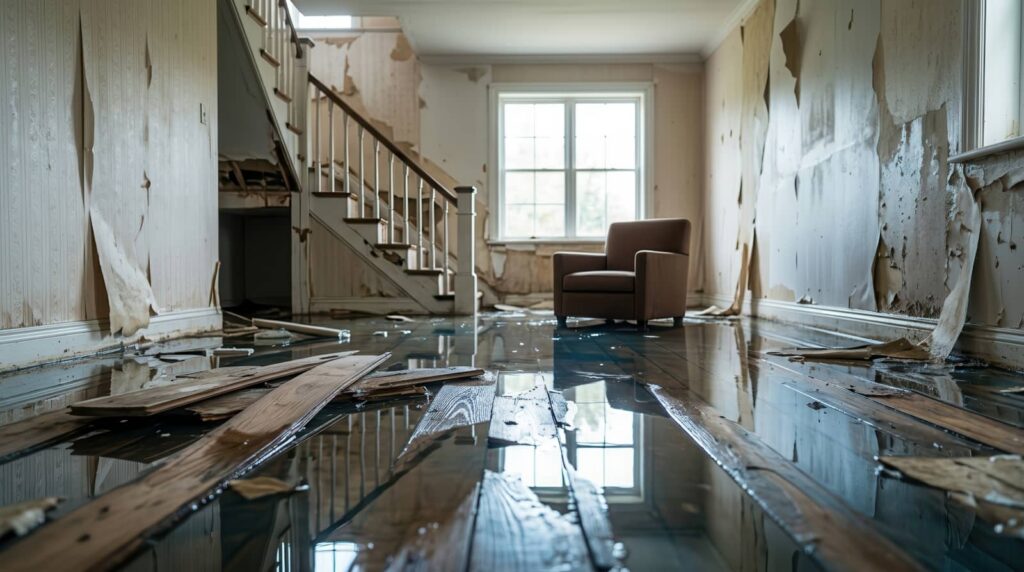
Before you clean up, take wide-angle photos that show each affected room and the overall extent of the flooding.
Then photograph damaged belongings up close and make sure you capture visible water lines on walls, furniture, and other surfaces.
These images give your insurer clear proof of the damage before anything changes.
Capture Wide-Angle Views
When you document flood damage, take wide-angle photos of each affected room before you move or clean anything. Step back so the images show walls, floors, ceilings, and major fixtures in one frame.
Capture each room from several corners to give your insurer a clear sense of the full extent of the loss. Include visible water lines, staining, warped materials, and standing water where they appear.
Keep your shots steady and well lit, and use your phone’s date stamp if it’s available. These broad images help connect later close-up photos to the larger scene and support a smoother claim review.
You’re not alone in this process; clear, complete views help your file speak for you.
Document Damaged Belongings
After you’ve captured the room as a whole, photograph each damaged belonging before anything gets moved, wiped down, or thrown away. Use clear, well-lit shots that show the item’s condition from multiple angles.
If possible, keep the background simple so the damage stays visible and easy to review. Then create a brief record that matches each photo to the item.
- Furniture with stains or swelling
- Electronics that won’t power on
- Clothing, linens, or rugs with visible damage
- Personal items showing warping, rust, or residue
Keep your notes factual and consistent. Include the item name, location, and a short description of what you see.
This gives your insurer a cleaner, stronger record and helps you stay organized while the process moves forward.
Note Water Lines
Document the water lines as soon as you can, because they often show how high floodwater reached in each room. Photograph the marks on walls, furniture, appliances, and stored items before you clean anything.
Include wide shots that show the room and close-ups that show the line clearly. If possible, place a ruler, tape measure, or another reference object near the mark to show scale.
Write the date, room name, and approximate height in your notes. Keep the images in order with your other claim records.
These photos help you and your adjuster compare damage across spaces and support your documentation package. When you stay organized, you’re better prepared to show the full impact of the flood and move through the claim process with confidence.
Record Moisture Readings in Every Room
Record moisture readings in every room so your flood claim shows the full extent of the damage. Use a moisture meter on floors, baseboards, drywall, and cabinets, and note the date, time, and room name.
Keep your notes consistent so your adjuster can compare conditions across the home. You’re helping create a clear record that fits the claim file and supports fair review.
- Measure each affected room separately.
- Write down the tool you used.
- Save readings before drying changes them.
- Recheck areas near walls and corners.
If a room feels dry on the surface, still test it, since hidden moisture can remain.
Share the readings with your insurer and keep a copy for your records.
Make a Flood Damage Item List
You should create a damaged item inventory that lists every flood-affected belonging.
Organize it room by room so you can show where each item was damaged.
Add replacement cost notes for each entry to support your claim.
Damaged Item Inventory
A detailed item list helps support a flood claim by showing exactly what was damaged, where it was located, and its condition after the loss. You should record each item before moving it or throwing it away, so your inventory stays reliable and complete.
Include facts that let the adjuster verify value and damage without guesswork.
- Item name and brand
- Estimated age and purchase price
- Visible damage and material condition
- Disposal, cleanup, or storage status
Use clear descriptions, not broad labels, and keep your wording consistent across entries. If you belong to a family sharing recovery tasks, assign one person to update the list so nothing gets missed.
Save receipts, model numbers, and photos with the inventory. A clean record makes your claim easier to review and harder to dispute.
Room-By-Room Breakdown
To make your flood damage item list easier to review, organize it by room and note each damaged item where it was found. Start with the kitchen, then move to bedrooms, bathrooms, closets, and the basement or garage.
For each room, write the item name, material, visible damage, and whether water touched it, soaked it, or left stains. Keep related items together so you can see the full impact in each space. If one room has several losses, number them for quick reference.
Include fixed features such as cabinets, flooring, trim, and built-ins when they’re affected. This room-by-room format helps you stay organized, avoids missed details, and makes it easier for your adjuster to follow your claim.
Replacement Cost Notes
Replacement cost notes help show what it will take to restore each flood-damaged item to its pre-loss condition. You should list each item with its exact name, quantity, age, brand, and model.
Then add the replacement price, labor cost, and any disposal or delivery charges. This helps your claim reflect real repair needs and keeps you aligned with your insurer’s review.
- Furniture and mattresses
- Appliances and electronics
- Flooring, drywall, and insulation
- Clothing, books, and household goods
Tie each note to photos, moisture readings, and cleanup records. If you belong to a shared property or family home, keep the list consistent so everyone can track losses clearly.
Precise notes support faster, fairer settlement decisions and reduce follow-up questions.
Save Flood Cleanup Records and Receipts
As you clean up flood damage, save every record and receipt that shows what you did and what you spent. Keep invoices for pumps, dehumidifiers, fans, cleaning supplies, and dumpster rentals.
Save contractor bills, service calls, mileage logs, and any temporary housing or storage costs tied to the loss. If you hire help, note who worked, when, and for how long.
Organize documents by date so you can match each cost to a specific cleanup step. Take photos of receipts before they fade, and store digital copies in a folder you can reach quickly.
When your insurer asks for proof, these records help you show the scope of your effort and support your claim. Staying organized also helps you feel connected to others facing the same process.
Write Repair Notes for Every Fix
Write repair notes for every fix so you can show what was damaged, what you repaired, and when the work was done.
Keep each note short, factual, and dated so your claim file stays clear and easy to review. You’ll help your insurer follow the timeline and see the scope of your response.
- Name the room or item you fixed.
- State the damage you saw before work started.
- Describe the repair you completed.
- Record the date, contractor name, and materials used.
Add notes right after each repair, while details are fresh.
If you handled the work yourself, write that too.
Stay consistent with your wording and format. Clear records show you’re organized, prepared, and part of a group that handles claims the right way.
Document Hidden Water Damage Thoroughly
Some flood damage stays out of sight, so you need to document hidden water thoroughly. You should inspect walls, floors, insulation, and cabinets for swelling, staining, warping, and mold.
Take clear photos before removal, during drying, and after repairs. Use a moisture meter and record each reading with the date, room, and exact spot. Mark where water rose and note which materials stayed damp.
If a contractor opens a wall or floor, save those findings and ask for written estimates. Keep cleanup logs that list equipment used, start and end times, and affected areas.
Pair every note with a photo or reading so your claim tells a complete, credible story. This helps your adjuster understand the full extent and lets you stay connected to the process.
Track Temporary Living Costs and Lost Items
Track every temporary living expense and lost item so your flood claim reflects the full financial impact. You should log hotel stays, rental costs, meals, laundry, and extra transportation as they happen.
Keep receipts and note dates, locations, and why each cost was necessary. Record every damaged or missing belonging, including quantity, brand, age, and estimated value, so your list feels complete and credible.
- Save receipts for all temporary housing
- List out-of-pocket food and travel costs
- Photograph discarded or damaged items
- Note replacements and approximate values
This record helps you show how the flood disrupted your daily life and what you lost.
When you stay organized, you give yourself a stronger voice in the claims process and help your household move forward with confidence.
Organize Evidence for the Insurance Adjuster
You should organize your flood evidence so the adjuster can review it quickly and clearly.
Keep a photo and moisture log that shows where the damage is, when you took each reading, and how conditions changed over time.
List each damaged item with its condition, estimated value, and any cleanup or repair notes so your claim stays precise and easy to verify.
Photo and Moisture Log
When floodwater enters your property, a photo and moisture log helps organize the evidence an insurance adjuster needs. You can build trust in the process by recording conditions clearly and consistently.
Take wide shots first, then close-ups of wet walls, floors, and affected belongings. Note the date, time, and room for each image. Pair each photo with moisture readings so you show where damage remains active and where drying progresses.
- Mark each entry with a location
- Capture the same view over time
- Record meter readings beside photos
- Keep notes on visible changes
This log gives your claim structure and helps you stay aligned with others handling the loss.
Itemized Damage Records
An itemized damage record helps you organize each affected possession, structure the claim file, and give the insurance adjuster a clear accounting of losses.
List every damaged item with room, description, brand, model, age, purchase date, and estimated value. Note whether you’ll clean, repair, or replace it, and match each entry to photos, moisture readings, and cleanup notes.
Include damaged structural parts too, such as drywall, insulation, flooring, cabinets, and electrical fixtures. If you have receipts, warranties, or bank records, attach them so your file feels complete and easy to review.
Keep your list updated as you discover hidden damage. A detailed record helps you stay organized and shows you’re part of a prepared, credible claim process.
Submit Your Flood Claim With Full Proof
Submit your flood claim with complete documentation so the insurer can evaluate the loss without delays. You strengthen your position when you attach clear, organized proof that shows what happened and when.
Include every record that supports your loss, then keep copies for your files so you stay prepared and connected to the process.
- Photos of damaged rooms, belongings, and structural impacts
- Moisture readings that confirm hidden water intrusion
- Itemized lists with purchase dates, values, and conditions
- Cleanup and repair notes from you or contractors
Submit the claim packet together, label each page, and match each photo to a specific loss.
When you present full proof, you help the adjuster verify damages faster and reduce avoidable questions.
Frequently Asked Questions
What Documents Prove Flood Damage for Insurance?
You can prove flood damage with dated photos, moisture readings, itemized loss lists, cleanup records, and repair notes. You’ll also strengthen your claim with contractor estimates, receipts, and any inspection reports.
How Soon Should I File a Flood Claim?
File it immediately after you’re safe and’ve documented the damage. Most policies require prompt notice, and delay can hurt your claim. Contact your insurer within 24 to 48 hours if possible, then keep records.
Can I Document Damage After Cleanup Begins?
Yes—you can, and you should, before evidence disappears. You’ll still need photos, moisture readings, item lists, cleanup logs, and repair notes. Document each step carefully, so you stay protected and supported.
Are Video Recordings Useful for Flood Claims?
Yes, you can use video recordings to show flood damage, water lines, affected contents, and cleanup progress. You’ll strengthen your claim by pairing video with photos, moisture readings, item lists, and repair notes.
Should I Keep Receipts for Temporary Housing?
Yes, keep every receipt for temporary housing; you’ll likely need them to support your claim. Save hotel, rental, and meal records, and note dates and reasons. Clear records help you document losses and strengthen reimbursement.
Review
When floodwaters recede, you become the lighthouse keeper of your claim. Each photo, receipt, moisture reading, and item list is a lantern that guides your insurer through the storm. If you gather proof, document hidden damage, and track every cost, you steer your recovery toward fair payment instead of guesswork. Organize your evidence, submit your claim fully, and let clear records carry your case safely to shore.