
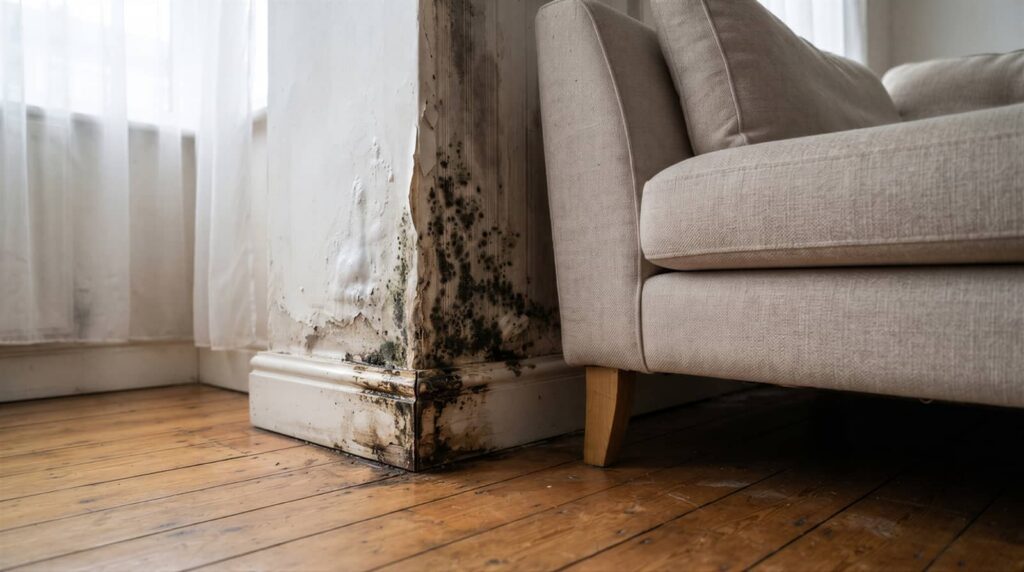
Key Takeaways
- Remove standing water immediately with pumps, wet vacs, mops, and buckets to slow mold growth.
- Dry all wet materials within 48 hours using fans, dehumidifiers, and good ventilation.
- Clean flooded surfaces thoroughly, remove mud and debris, and discard saturated porous materials.
- Inspect for hidden mold in walls, floors, trim, and baseboards, treating suspicious spots as mold.
- Fix moisture sources quickly and call a professional if mold covers more than 10 square feet or keeps returning.
Remove Standing Water Fast
Get standing water out as quickly as possible to limit mold growth. You protect your space best when you act as a team with the problem: shut off power if needed, then use pumps, wet vacs, mops, and buckets to remove water from floors, basements, and low spots.
Push water toward drains only if the system’s safe and clear. Open exterior doors for ventilation, but don’t wait on airflow alone.
For flood damage mold prevention, focus on speed, safety, and complete extraction around walls, cabinets, and hidden corners. Check under furniture and inside built-in spaces.
If water keeps returning, find the source and stop it. The sooner you remove standing water, the less chance mold has to take hold and spread.
Dry Materials Within 48 Hours
Once standing water is removed, dry all wet materials within 48 hours to limit mold growth. You need to act on carpets, padding, drywall, insulation, wood, and furniture before spores colonize damp fibers.
Move items to a dry, ventilated area and separate stacked materials so air can reach every surface. Use fans, dehumidifiers, and open access points to speed drying, and lift objects off floors with blocks or racks.
Remove saturated porous materials that won’t dry quickly, because they can keep feeding mold. Check hidden cavities, corners, and seams for trapped moisture.
Keep a close log of what you’ve dried so your team stays organized and focused. When you work fast together, you protect your space and reduce the chance of recurring damage.
Lower Humidity in the Home
You need to reduce indoor moisture quickly after flooding to limit mold growth.
Run dehumidifiers daily to keep relative humidity low, and ventilate damp rooms with exhaust fans or open windows when outdoor conditions allow.
Monitor humidity levels so you can correct wet areas before mold starts spreading.
Reduce Indoor Moisture
Lower indoor humidity quickly to slow mold growth after flooding. You can do this by sealing doors and windows, closing off damp rooms, and stopping outside air from feeding moisture inside.
Remove wet rugs, cardboard, and porous items that hold water and keep your home from drying evenly. Wipe condensation from glass, tile, and metal surfaces so moisture doesn’t linger.
Use exhaust fans in bathrooms, kitchens, and laundry areas when you need them, and vent steam outdoors. Check crawl spaces, closets, and corners where still air traps dampness.
Keep a hygrometer nearby so you know when conditions stay high. When you act fast, you protect your space, support your household, and cut the chance mold will take hold.
Run Dehumidifiers Daily
Run dehumidifiers daily to pull excess moisture from the air and slow mold growth after flooding.
You should place each unit in the most affected rooms, close windows, and keep doors shut so the machine can work efficiently.
Set the target indoor humidity between 30% and 50%, and check the meter often.
Empty the reservoir before it overflows, or use a drain hose if your model allows it.
Clean the filter and coil on schedule so airflow stays strong.
If one unit can’t keep up, add another rated for the room size.
You’re not just drying space; you’re protecting your home, your air, and your community’s shared standard of recovery.
Track progress daily until surfaces feel dry and humidity remains stable.
Ventilate Damp Rooms
Ventilate damp rooms to help lower indoor humidity and slow mold growth after flooding. Open windows when outdoor air is drier, and use fans to move moist air out. Keep doors between rooms open so air can circulate.
If you’ve got HVAC, run it with clean filters to support drying. Watch for cooler corners, closets, and bathrooms where moisture lingers and your community’s recovery can stall.
- Sunlit windows cracked open
- A box fan pushing air outward
- A hallway door left ajar
- A bathroom mirror clearing fast
Measure humidity with a hygrometer; aim below 60%, ideally 30% to 50%. Ventilation won’t fix soaked drywall, but it helps protect your home team while you remove wet materials and reduce mold risk after standing water.
Clean Flooded Surfaces Thoroughly
You should remove all mud and debris from flooded surfaces as soon as possible, since residue can trap moisture and support mold growth.
Clean the area with a disinfecting cleaner, following the product label for contact time and coverage.
Scrub seams, joints, and other hidden moisture areas so you don’t leave damp material behind.
Remove Mud And Debris
Scrub away mud and debris from all flooded surfaces as soon as it’s safe to do so, because residue holds moisture and organic material that can feed mold growth.
You’ll work faster if you start at the highest clean point and move downward. Use stiff brushes, plastic scrapers, and buckets of clean water to lift packed silt before it dries hard. Rinse often so you’re not spreading grime back onto already cleaned areas.
Keep your team organized and your path clear.
- Caked mud on tile
- Leaves trapped in corners
- Silt lines on walls
- Grit under cabinets
Bag debris right away, and wear gloves and boots so you can keep handling tasks safely.
Clean surfaces should look dull but free of visible buildup.
Use Disinfecting Cleaner
After you’ve cleared mud and debris, wash all flooded surfaces with a disinfecting cleaner to remove remaining contaminants and reduce mold risk.
Choose a product labeled for hard, nonporous flood-cleanup use, and follow the contact time exactly. You should work in small sections so the cleaner stays wet long enough to do its job.
Use clean cloths, mop heads, or brushes, and replace them when they get dirty so you’re not spreading residue around your space. Rinse surfaces if the label calls for it, then let them dry completely.
Wear gloves and eye protection, and keep the area ventilated. When you clean this way, you’re protecting your home and helping your crew move toward a safer, healthier recovery.
Scrub Hidden Moisture
Moisture can hide in seams, corners, baseboards, and textured surfaces, so clean flooded areas thoroughly instead of just wiping what’s visible. Scrub each wet surface with detergent and safe water, then rinse and dry it fast.
Use a brush on grout lines, trim, and vent covers where residue clings. If you’re part of a cleanup crew, stay consistent so no one leaves damp pockets behind.
- Baseboard edges with dark water stains
- Tile grout packed with grit
- Cabinet undersides and hinge pockets
- Carpet tack strips near walls
Work in small sections, changing cloths before they spread grime. Check behind appliances, under sinks, and inside wall cavities if accessible.
When surfaces feel cool or damp, keep drying. Thorough scrubbing helps your space recover cleanly and lowers mold risk.
Salvage Safe Items and Discard Damaged Ones
When you sort through flood-damaged belongings, salvage only items that are cleanable, nonporous, and structurally sound, and discard anything that stayed wet long enough to support mold growth.
You can usually keep hard plastic, glass, metal, and sealed surfaces if you wash them with detergent, rinse well, and dry them fully. Launder clothing, bedding, and other washable fabrics in hot water if the care label allows it.
Toss drywall, insulation, particleboard, upholstered items, mattresses, paper goods, and food.
Separate clean items from contaminated ones so you don’t spread spores. Wear gloves and a mask while handling debris, and bag waste tightly before removal.
If you’re unsure, choose safety over saving it. Your home team deserves materials that won’t backfire.
Check Walls and Floors for Hidden Mold
Check every wall and floor for hidden mold, especially where floodwater reached, paint blistered, or materials stayed damp.
You should inspect baseboards, trim, drywall seams, and floor edges for discoloration, swelling, or a musty odor. Use a flashlight and look closely at corners and behind loose coverings.
If you belong to the group handling cleanup, stay consistent and document each finding.
- Dark specks on painted walls
- Warped flooring near thresholds
- Soft drywall beneath windows
- Staining around outlets or vents
Mark suspect areas so you can track them later and avoid missing damage.
Hidden growth often starts inside materials before you see it outside, so treat any suspicious spot as real until confirmed otherwise.
Use Fans, Dehumidifiers, and Ventilation
After you’ve marked hidden mold areas, dry the space as fast as possible with fans, dehumidifiers, and open ventilation.
Position fans to move air across damp surfaces, not just around the room, so moisture leaves materials faster. Set dehumidifiers in the wettest areas and empty them often so they keep pulling water from the air.
If outdoor conditions are drier, open windows and doors to increase airflow; if outside air is humid, keep the space closed and rely on mechanical drying.
Move lightly wet items into the airstream and separate stacked materials so each piece can dry. Check humidity with a meter and keep it low until surfaces feel dry.
Working together, you can shorten drying time, reduce risk, and protect the space as a team.
Keep Mold From Coming Back
Once the area is dry, keep mold from coming back by fixing the moisture source right away, whether it’s a leak, poor drainage, a damaged roof, or ongoing humidity.
Inspect walls, floors, and windows weekly so you catch damp spots before they spread. Seal cracks, replace failing caulk, and keep gutters clear to move water away from your home. You’re protecting the whole space, not just one room.
- A quiet drip under a sink
- A wet line along a basement wall
- Condensation beading on cold glass
- Damp air lingering after rain
Wash and dry any flooded belongings fast, and keep indoor humidity low.
When you stay consistent, your home feels safer, cleaner, and easier for everyone to share.
When to Call a Mold Remediation Pro
Call a mold remediation pro when mold covers more than about 10 square feet, keeps returning after cleanup, or hides inside walls, ceilings, or HVAC parts.
You also need help if floodwater soaked insulation, drywall, carpet pad, or wood framing, because trapped moisture can keep feeding growth.
If you smell musty odors after drying, see staining around vents, or notice worsening allergy or asthma symptoms, don’t wait.
A certified pro can inspect, contain, remove contaminated materials, and verify that moisture levels are safe.
You’re not handling this alone; bringing in expert support helps protect your home, your health, and your crew.
In a flood recovery setting, that shared focus matters. Quick action now can stop a small problem from becoming a full structural cleanup.
Frequently Asked Questions
How Do I Tell if Floodwater Was Contaminated?
You can’t tell for sure by looks alone; assume contamination if floodwater touched sewage, chemicals, or debris. Wear gloves, avoid contact, and test suspect water through your local health department or environmental lab.
What Protective Gear Should I Wear During Cleanup?
You should wear waterproof gloves, N95 respirator, goggles, long sleeves, long pants, and sturdy boots. If you’re handling contaminated water, add disposable coveralls and consider hearing protection for power tools during cleanup.
Can I Stay in the Home While Drying Starts?
Yes, you can stay if your home’s safe, dry, and well-ventilated, but leave if you smell mold, feel ill, or still have standing water. You’ll protect yourself by isolating wet areas and running fans.
How Should I Handle Moldy HVAC Filters?
You should remove moldy HVAC filters immediately, bag them, and replace them. Don’t run the system until you clean the housing and ducts; otherwise, you’ll spread spores. If mold’s extensive, call a professional.
Does Homeowner’s Insurance Cover Mold Cleanup?
Usually, yes if your policy covers the cause. Like a lock on a leaky door, you should review exclusions, document damage, and call your insurer fast. You’ll protect your claim and your home.
To Sum Up
You’ve cleared the water, but the real threat may still be hiding. If you don’t dry every surface fast, mold can start where you can’t see it, inside walls, under floors, and behind trim. Keep fans running, dehumidifiers working, and humidity low. Watch for new stains, odors, or soft spots. If moisture lingers or growth appears, don’t wait. Call a mold remediation pro before the damage spreads and the cleanup gets harder.