Commercial fire cleanup involves more than removing visible soot. Commercial fire damage cleanup must also address hidden smoke residue, water intrusion, and lingering odors that can continue affecting your building after the flames are out. You need a controlled process that secures the site, documents losses, dries affected areas, and checks safety systems before reentry. When each step is handled correctly, you can restore the property with less disruption and move closer to reopening safely.
Key Takeaways
- Secure the site quickly to prevent further damage, control hazards, and restrict access to authorized professionals only.
- Document all fire damage with photos, videos, inventories, and receipts to support insurance claims.
- Remove standing water, dry affected areas, and manage moisture to prevent secondary water damage.
- Clean soot, smoke residue, and odors using surface-specific methods for safe, effective restoration.
- Verify safety systems and complete a final walkthrough before reopening the business with confidence.
What Commercial Fire Cleanup Covers
Commercial fire cleanup covers the full recovery process after a fire, from removing soot and smoke residue to eliminating persistent odors, clearing debris, and handling damaged materials.
You rely on commercial fire damage cleanup to restore surfaces, contents, and systems with controlled methods that limit further loss. Technicians assess affected areas, document conditions, and separate salvageable items from materials that can’t be reused.
They use targeted cleaning agents, deodorization equipment, and moisture management to reduce hidden contamination and support reopening goals. You also get clear reporting that helps your team stay aligned and confident during each step.
When you choose a coordinated response, you protect your workspace, your people, and the sense of stability your business needs to move forward.
Secure the Site After a Fire
Before cleanup can begin, you need to secure the site to prevent further damage, control hazards, and protect anyone who enters the building. You should shut off utilities only if it’s safe, then mark unstable floors, weakened ceilings, and other danger zones.
Lock entrances, post clear warnings, and restrict access to authorized professionals so your team stays protected and your recovery stays on track. If windows, doors, or roof openings are exposed, you’ll want to cover them quickly to keep out weather, pests, and trespassers.
Remove small immediate threats only when you can do so safely, and keep walkways clear for responders. When you secure the building this way, you create a safer path for your crew, your customers, and your return to business.
Document Damage for Insurance
Once the site is secure, you can start documenting the damage for your insurance claim.
Walk through each affected area and take clear photos and video from multiple angles before moving anything. Capture structural damage, equipment, inventory, furniture, and visible signs of heat, smoke, and water impact.
Create a dated inventory with item descriptions, model numbers, estimated values, and purchase records if you have them. Keep receipts for emergency services, temporary repairs, and business interruptions.
Note who entered the property and when, since that supports a clean claim file. Store copies in the cloud and share them with your adjuster quickly.
Careful documentation helps you protect your recovery, communicate confidently, and stay aligned with the team supporting your business.
Remove Soot, Ash, and Debris
With the structure secured and documentation complete, you can begin removing soot, ash, and loose debris to reduce further staining, corrosion, and odor migration.
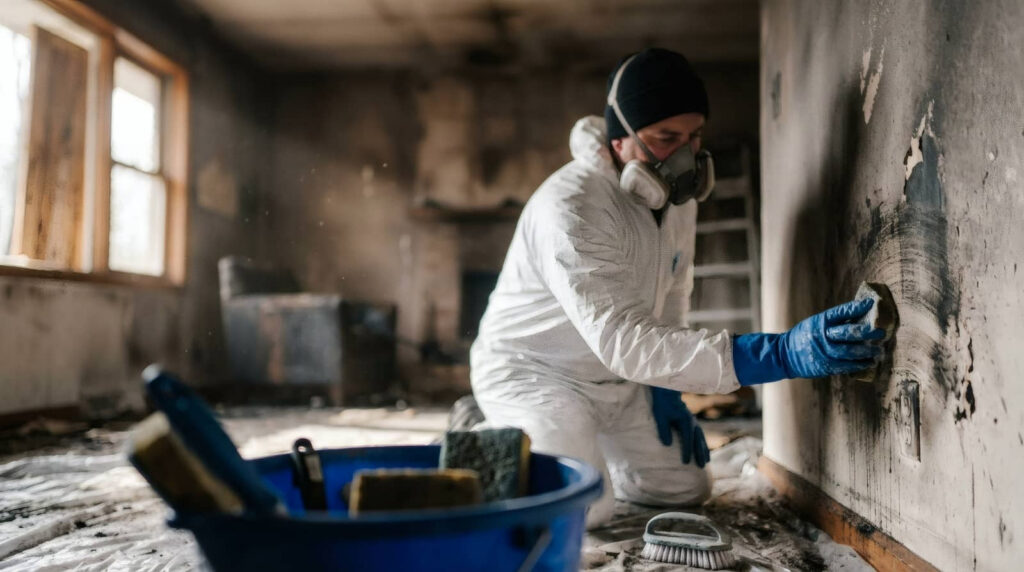
You should work methodically, starting at the perimeter and moving inward so settled residue doesn’t track across cleaned areas. Use HEPA vacuuming, dry sponges, and nonabrasive tools to lift particulate from surfaces without grinding it in.
Bag and remove damaged materials that can’t be cleaned safely, and isolate debris so it doesn’t spread contamination through your facility.
Wear proper PPE and keep pathways clear for your team. This step helps stabilize the environment, protects finishes, and prepares your space for the next phase of recovery.
When you proceed with care, you’ll support a cleaner, safer return for everyone involved.
Dry Out Firefighting Water Damage
You’ll need to remove any standing water quickly to limit further damage and prevent mold growth.
Next, you should dehumidify the affected areas to accelerate drying in walls, floors, and structural materials.
Ongoing moisture monitoring helps you confirm the space is drying properly and supports a safe, controlled recovery.
Remove Standing Water
Swift water removal comes next after the fire is out, because firefighting water can soak flooring, drywall, insulation, and contents fast. You’ll protect your building by extracting pooled water from rooms, hallways, and hidden cavities as soon as access is safe.
Crews use pumps, wet vacuums, and portable extractors to pull water off surfaces and from low areas, then clear trapped runoff around baseboards, equipment, and storage zones. You should also isolate affected sections so the water doesn’t spread into clean areas.
This step reduces structural stress, limits secondary damage, and helps your recovery team work with a cleaner, safer site. When you act quickly, you give your business the best chance to stabilize operations and stay on track toward reopening.
Dehumidify Affected Areas
Once standing water is removed, dehumidification begins to pull moisture out of the air and materials that firefighting water left behind. You’ll use commercial dehumidifiers to lower humidity and slow hidden damage in walls, floors, insulation, and contents.
This step helps protect your building from swelling, warping, corrosion, and secondary microbial growth. You can place equipment strategically so airflow reaches damp zones without disrupting safe access.
In a coordinated cleanup, you’re not handling this alone; trained technicians set the drying plan and keep the work moving efficiently. As moisture drops, your space becomes safer for restoration crews and closer to reopening.
Dehumidification supports a cleaner recovery, helps preserve salvageable materials, and gives your team a stronger path back to normal operations.
Monitor Moisture Levels
As drying progresses, you should monitor moisture levels closely to confirm that firefighting water is actually leaving the structure and not lingering in hidden spaces.
Use calibrated meters on drywall, framing, flooring, and insulation, then compare readings in affected and unaffected areas. Track changes daily so you can spot stalled drying early and adjust airflow or dehumidification quickly.
Pay special attention to wall cavities, baseboards, and subfloors, where moisture often hides after fire suppression. Consistent data helps you protect materials, reduce secondary damage, and document recovery for insurers and reopening decisions.
When you verify each area is returning to safe ranges, you’re not guessing—you’re guiding a controlled, confident restoration that keeps your team aligned and your business moving forward.
Remove Smoke Odor From Surfaces
You’ll need to treat affected surfaces with targeted odor-neutralizing methods to reduce embedded smoke smells.
First, you can remove soot and residue with the right cleaning agents and tools, since leftover contamination often keeps odors active.
After that, you’ll apply surface-specific treatment to help restore clean indoor air and support a safe reopening.
Surface Odor Treatment
Smoke odor often clings to walls, ceilings, counters, and other hard surfaces after a commercial fire, so cleanup teams target those areas with controlled cleaning methods and specialized deodorization products.
You’ll get better results when technicians assess each surface type and apply the right treatment to bind, lift, or neutralize odor molecules. In many spaces, this step helps restore a cleaner indoor environment and supports your team’s return to work with confidence.
Professionals use low-moisture methods that respect finishes while addressing embedded smoke smell. They also verify that treated areas smell consistent throughout the building, not just in isolated rooms.
With careful surface odor treatment, you can feel more secure that your business space is moving toward a healthy, welcoming recovery.
Residue Removal Methods
Residue removal starts with identifying the exact smoke film, soot, and ash on each surface so crews can choose the safest, most effective cleaning method.
You’ll see trained teams sort porous, semi-porous, and nonporous materials, because each one traps odor differently. They may use HEPA vacuuming, dry sponging, alkaline detergents, or solvent cleaners to lift residue without driving it deeper.
On delicate finishes, they’ll test small areas first, then clean from top to bottom to prevent recontamination. For textured surfaces, they may agitate gently with microfiber or soft brushes.
After cleaning, they’ll inspect for hidden film and repeat treatment where needed. This careful process helps you restore a cleaner, healthier workspace and brings your team back into a space that feels ready again.
Restore Walls, Floors, and Contents
Technicians restore walls, floors, and contents by removing damaged materials, cleaning soot from all accessible surfaces, and addressing smoke odor at the source.
You’ll see them assess each room, separate salvageable items from unsalvageable ones, and use targeted methods that match the material type.
They’ll clean hard surfaces, treat porous finishes, and stabilize flooring so your space can move toward recovery without further loss.
Your inventory, fixtures, and equipment receive careful handling, and any restorable contents get packaged, labeled, and tracked for return.
This process helps you keep your business’s identity intact while reducing replacement costs.
Check Safety Systems Before Reopening
Before you reopen, you should verify that all safety systems work as designed. Test fire alarms, pull stations, sprinklers, smoke detectors, emergency lighting, exit signs, and backup power with qualified technicians.
Confirm that panel indicators clear properly and that any trouble signals are resolved. You should also check gas shutoffs, electrical breakers, and suppression equipment for damage or reset issues.
If your facility uses monitored alarms, make sure the monitoring center receives and acknowledges signals. Document every inspection and repair so your team has a clear record of readiness.
When these systems pass, you lower risk and help everyone return with confidence. A careful verification process protects your people, supports compliance, and shows your business is ready to operate safely again.
Get the Building Ready to Reopen
Once the safety systems are cleared, you can focus on preparing the building itself for reopening.
You’ll want to remove remaining debris, clean soot from surfaces, and eliminate smoke residue from walls, ceilings, HVAC registers, and fixtures.
Replace damaged materials that could affect air quality or structural integrity, including insulation, drywall, and flooring.
Document every step with photos and service records so you can support insurance claims and verify compliance.
Test lighting, alarms, locks, and utilities again before inviting staff back.
Then, walk each area with your cleanup team to confirm the space feels safe, orderly, and ready for your people.
A thorough reset helps your business reopen with confidence, restore trust, and give your team the welcoming environment they deserve.
Frequently Asked Questions
How Soon Should Cleanup Begin After a Commercial Fire?
You should start cleanup as soon as the fire department clears the site, ideally within 24 hours. You’ll limit soot, smoke odor, corrosion, and further damage while preserving evidence and supporting reopening.
Can Employees Enter the Building During Fire Damage Cleanup?
Usually, you shouldn’t enter until cleanup crews clear the area; where there’s smoke, there’s fire, and hazards linger. You’ll need safety checks, restricted access, and protective gear before you rejoin operations.
What Items Are Usually Salvageable After Smoke Exposure?
You’ll often salvage hard surfaces, metal fixtures, some electronics, glass, sealed documents, and launderable textiles after smoke exposure. You’ll need quick assessment, professional cleaning, and odor removal to protect what’s recoverable and safe.
How Long Does Commercial Fire Restoration Typically Take?
You’ll usually see restoration take days to weeks, depending on soot depth, smoke odor, water damage, and rebuild needs. You can expect a careful crew to move steadily, document losses, and guide your reopening.
Will Business Equipment Need Professional Cleaning After a Fire?
Yes, you’ll likely need professional cleaning, because smoke, soot, and corrosive residues can damage equipment. You should have technicians assess, clean, and test everything so you can protect performance, safety, and your team’s continuity.
Conclusion
When you handle commercial fire damage cleanup quickly, you protect more than your building—you protect your business’s future. You secure the site, document every loss, remove soot and smoke, dry hidden water damage, and restore surfaces with care. Like a storm clearing from a skyline, the damage fades and safety returns. Before you reopen, you’ll know your space is clean, compliant, and ready to welcome employees and customers back with confidence.