
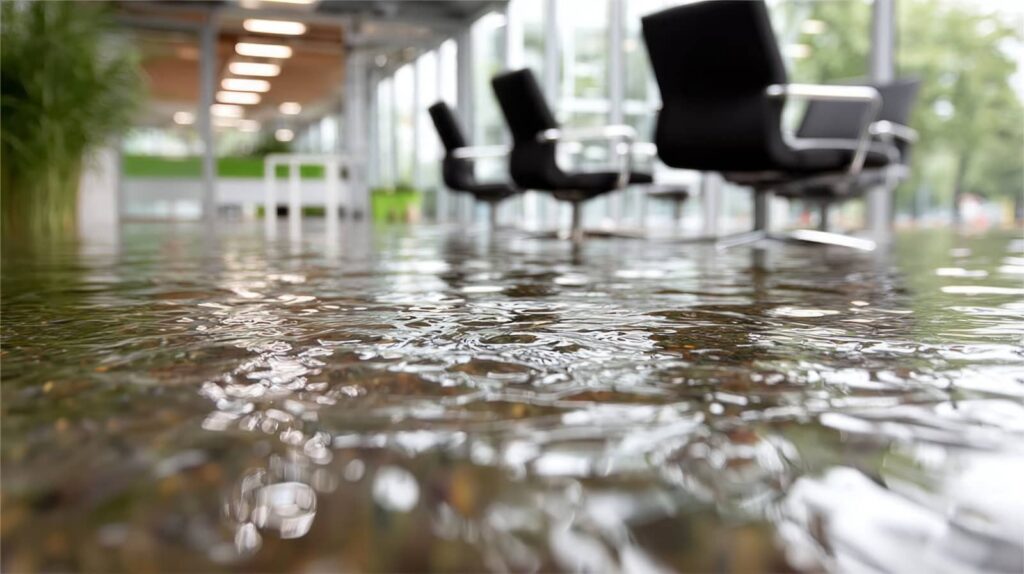
About 40% of businesses never reopen after a major disaster, so you can’t afford to treat office water damage lightly. Office Water Damage Cleanup starts by stopping the leak, assessing the hazard, and moving fast before moisture spreads into walls, floors, and equipment. If you miss hidden dampness, mold can follow within days, and the real cost starts to climb. The next steps decide whether you recover quickly or face a longer shutdown.
Key Takeaways
- Stop the leak immediately, shut off water supply, and protect nearby rooms from further damage.
- Inspect the office safely, keep power off, and document wet surfaces, warped materials, and hidden moisture.
- Remove standing water and dry floors and walls quickly with pumps, air movers, and dehumidifiers.
- Move furniture and electronics out of affected areas, unplug equipment, and prevent moisture from wicking.
- Clean and dry thoroughly to prevent mold, replace unsalvageable materials, and keep humidity below 60%.
Stop the Leak and Limit Damage
Once you spot water intrusion, act fast to stop the source and limit spread. Shut off the supply valve, isolate the affected zone, and protect adjacent rooms with barriers or absorbent controls.
If the leak comes from HVAC, plumbing, or a roof penetration, notify maintenance right away so you can keep the problem from growing.
Remove standing water only after the source is controlled, then document affected surfaces, equipment, and furnishings for your office water damage cleanup plan.
Prioritize wet flooring, baseboards, and wall finishes, since moisture can migrate quickly. Keep traffic out of the area to reduce tracking and secondary damage.
Check Office Water Damage Safely
With the leak controlled, inspect the area carefully before anyone resumes work. You should walk the space slowly, looking for visible stains, warped materials, ceiling marks, and active drips.
Keep power off in affected zones until you confirm they’re dry and stable. Don’t touch soaked outlets, cords, or equipment, and mark hazards so your team stays clear.
Check baseboards, drywall seams, and under desks for hidden moisture or soft spots. Use a flashlight to spot discoloration and odor changes that signal deeper damage.
Document conditions with photos and notes so your cleanup crew can prioritize repairs. If you see sagging ceilings, electrical issues, or widespread saturation, stop and call qualified help.
Careful inspection protects your workplace and helps everyone feel confident returning together.
Dry Wet Flooring and Walls Fast
Start drying wet flooring and walls immediately to limit swelling, staining, and mold growth. You should remove standing water with pumps, wet vacuums, or absorbent mops, then run high-velocity air movers across the affected area.
Open doors and interior vents to improve air exchange, and use dehumidifiers to pull moisture from the air and hidden cavities. Check baseboards, drywall edges, and floor seams because trapped moisture can linger there.
Keep the work area clear so your team can move safely and stay focused on recovery.
- Lift damp rugs or mats.
- Pull back carpet edges for airflow.
- Dry wall surfaces from bottom to top.
- Monitor moisture until readings stabilize.
Protect Furniture and Electronics
As floors and walls begin to dry, move furniture and electronics out of the affected zone or elevate them on dry blocks to keep moisture from wicking upward. You’ll protect desks, chairs, printers, and monitors by creating airflow underneath each item and preventing direct contact with damp surfaces.
Unplug power cords before relocation, and keep cables organized so your team can reset workstations quickly. Wipe visible water from surfaces with clean, lint-free cloths, then inspect seams, feet, and undersides for hidden dampness.
If an item’s base is swollen or unstable, set it aside for professional evaluation. Cover clean, dry equipment with breathable material, not plastic, so trapped humidity doesn’t build.
These steps help your office recover faster and keep everyone’s workspace ready.
Prevent Mold and Musty Odors
Even after visible water is gone, trapped moisture can fuel mold growth and musty odors within 24 to 48 hours. You should act fast to dry carpets, baseboards, and wall cavities with high-capacity airflow and dehumidification.
Inspect hidden spaces, including behind trim and under raised flooring, because damp pockets can keep spores active. If you share the space with a team, you’ll want everyone to keep doors open during drying and report any odor right away.
- Remove soaked materials that can’t dry fully
- Clean hard surfaces with appropriate antimicrobial products
- Replace HVAC filters after contamination
- Verify humidity stays below 60%
When you control moisture early, you protect air quality and help your office feel safe, clean, and ready for everyone.
Get Employees Back to Work Quickly
Once drying, cleaning, and repairs are underway, you can reduce downtime by coordinating access, prioritizing essential work areas, and setting a clear reentry timeline for employees.
You should open unaffected zones first, confirm safe walking paths, and restore utilities before staff returns. Communicate daily updates so everyone knows which desks, meeting rooms, and shared systems are ready.
If you must phase access, assign teams to alternate spaces and remote tasks, then move them back as inspections pass. Verify that moisture readings, electrical systems, and HVAC components meet clearance levels before occupancy.
Clear guidance helps your people feel informed, supported, and included while operations resume. Fast, organized reentry protects productivity, limits confusion, and gets your office working together again sooner.
Frequently Asked Questions
How Much Does Office Water Damage Cleanup Usually Cost?
You’ll usually pay $1,000 to $5,000 for office water damage cleanup, but minor jobs can cost less and severe losses much more. You should factor in drying, demolition, repairs, sanitation, and equipment restoration.
Does Commercial Insurance Cover Leak-Related Cleanup Expenses?
Usually, yes—if your policy covers sudden leaks, you’ll likely recover cleanup costs. Coincidence often strikes when water spreads fast, so you should review exclusions, document damage, and file promptly to protect your claim.
How Long Should Restoration Take for a Typical Office?
You can expect restoration to take one to five days for minor damage, but larger losses may need a week or more. You’ll reduce downtime faster when you act quickly, document losses, and coordinate drying.
Can Employees Stay in the Building During Cleanup?
Yes, you can often stay in the building if you’re in the dry wing, like sailors sheltering on one deck while another’s repaired. You’ll need containment, ventilation, and clear access routes, though.
When Should a Professional Restoration Company Be Called?
You should call a professional restoration company immediately after any significant leak, flooding, or hidden moisture. They’ll assess damage, dry materials, protect electronics, and reduce downtime, so you can restore your workspace safely and quickly.
Conclusion
When you stop the leak fast, check damage safely, and dry floors and walls with air movers and dehumidifiers, you cut downtime and reduce repair costs. You’ll also protect furniture and electronics by moving them up and unplugging them, while keeping humidity below 60% to stop mold and musty odors. If the cleanup seems disruptive, picture your office reopening clean, dry, and ready for work instead of facing hidden damage later.