
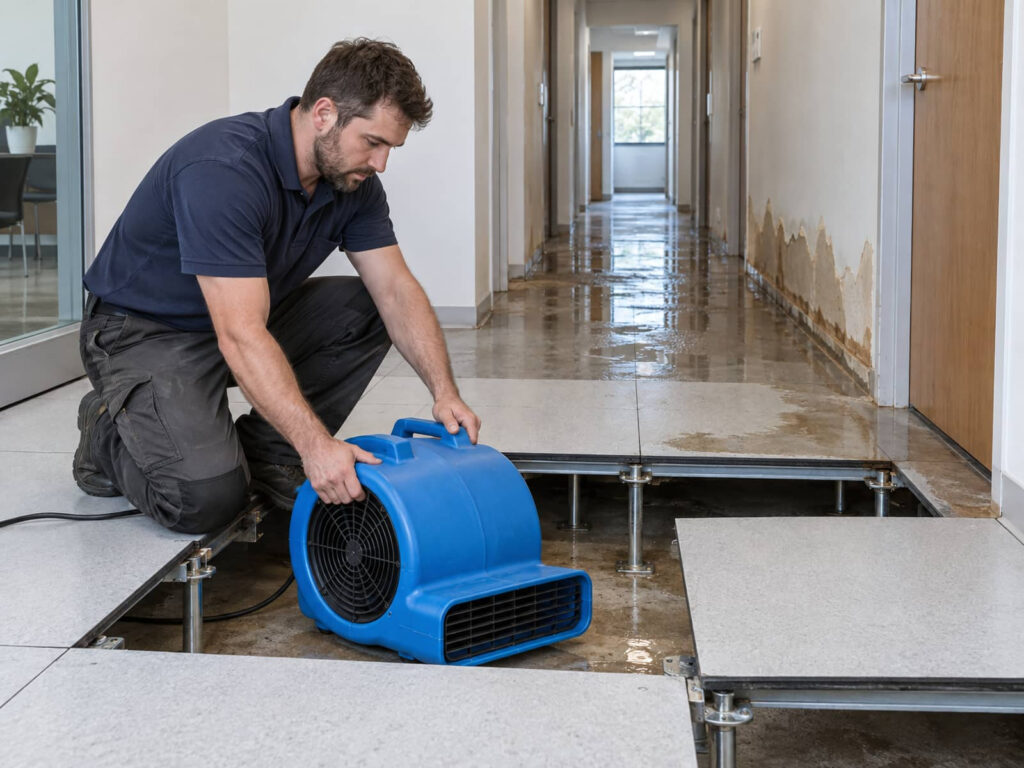
After a burst pipe hit a 12-unit office suite, the claim stalled because no one had a clean record of the loss. You need commercial restoration insurance documentation that starts with the policy number, incident summary, and loss details, then adds dated photos, damage notes, cleanup logs, and repair estimates. Each piece supports the next, and when the adjuster asks for proof, the missing link is usually the one that slows everything down.
Key Takeaways
- Record policy details, loss date, location, incident summary, mitigation actions, labor hours, invoices, and inspection findings.
- Photograph damage before cleanup, using wide shots, close-ups, consistent lighting, and scale references.
- Log detailed damage notes with dates, times, affected areas, measurements, odors, staining, and moisture readings.
- Maintain cleanup records for each task, including dates, locations, equipment used, checklists, service logs, and disposal photos.
- Obtain detailed repair estimates with labor, materials, equipment, quantities, unit costs, and scope notes tied to documented damage.
What Commercial Insurance Claims Need First
Before you file a commercial restoration insurance claim, you need clear documentation that shows the damage, the response, and the repairs. Start with the policy number, loss date, location, and a brief summary of what happened.
Then gather commercial restoration insurance documentation that tracks emergency mitigation, cleanup steps, materials removed, labor hours, and vendor invoices.
You should also record who inspected the site, when they arrived, and what they found.
Keep a timeline that connects the loss to each action you took, so your file feels complete and easy to review.
When you stay organized, you protect your team, support your claim, and help everyone involved move forward with confidence.
Photos That Prove Commercial Damage
Clear photos give your commercial restoration insurance claim visual proof of the damage, the affected areas, and the condition of the property after each step in the response process.
You should capture wide shots first, then move to close-ups that show impact on walls, floors, equipment, and inventory. Use consistent lighting and include familiar reference points so adjusters can understand scale and location.
Photograph water lines, soot patterns, warped materials, and broken fixtures before any cleanup starts. As restoration continues, take new images that show drying, removal, and repairs in progress.
Keep files organized by date, room, and event. That way, you’re building a clear record your team can trust and your insurer can review without confusion, delay, or unnecessary questions.
Damage Notes That Support Your Claim
Alongside photos, written damage notes help you explain what happened, what you found, and how conditions changed over time. You should record dates, times, affected areas, and the exact materials involved so your claim stays clear and credible.
Note odors, staining, moisture readings, warped surfaces, and any visible spread. Keep each entry factual, brief, and consistent, so your documentation feels reliable to the adjuster and your team.
- Identify the location and room.
- Describe the damage in measurable terms.
- Log changes after each inspection.
When you write notes right away, you build a shared record that supports your crew, protects your business, and shows you’re handling the loss with care.
Cleanup Records That Strengthen Your Claim
When you document cleanup work carefully, you create a clear record of the steps taken to limit damage and support your insurance claim. Record each task you complete, including water extraction, debris removal, surface cleaning, drying, and containment setup.
Note the date, time, location, equipment used, and the crew members involved. Keep signed checklists, service logs, and daily progress notes so you can show exactly what happened and when.
If you dispose of damaged materials, photograph them first and save disposal receipts. Track moisture readings and sanitation actions to confirm conditions improved.
These records help your adjuster verify that you acted promptly and responsibly. When your team keeps consistent cleanup documentation, you present a united, credible account that fits smoothly into the rest of your claim.
Repair Estimates and Scope Details
Once cleanup is complete, your next step is to document the repair work your property needs and why. You should request detailed estimates from qualified contractors so your claim reflects real restoration costs, not guesses.
Include labor, materials, equipment, permits, and any code upgrades tied to the loss. Make sure each estimate matches the damaged areas you photographed and noted earlier. A clear scope helps the adjuster see what’s needed and keeps your team aligned.
- Identify each damaged system and finish.
- List specific repairs, quantities, and unit costs.
- Attach scope notes that explain cause, extent, and necessity.
When you present organized estimates, you strengthen your claim and help everyone move forward together with confidence.
Frequently Asked Questions
How Long Should Commercial Restoration Records Be Kept?
You should keep commercial restoration records at least seven years, and longer if claims, contracts, or regulations require it. You’ll protect yourself by storing photos, notes, invoices, cleanup logs, and repair details securely.
Who Can Certify Commercial Damage Documentation Accuracy?
You can have a licensed adjuster, certified restoration professional, or independent inspector certify it; they’ll verify photos, notes, cleanup logs, and repairs. Their review can seem like a mountain, but it builds trust and belonging.
Can Digital Records Replace Original Restoration Paperwork?
Yes, you can use digital records, but you shouldn’t discard originals unless your insurer allows it. You’ll strengthen your claim by keeping signed paperwork, photos, cleanup logs, and repair invoices together as backup evidence.
How Do Insured Parties Request Missing Claim Documents?
You request missing claim documents by contacting your adjuster, insurer, or contractor, then listing each item, dates, and claim number. Ironically, the “missing” files often reappear once you organize photos, notes, and emails.
What Formatting Do Insurers Prefer for Restoration Submissions?
You should submit restoration records in clear, labeled PDFs or spreadsheets, with dated photos, itemized damage notes, cleanup logs, and repair estimates. You’ll help insurers review your claim faster when everything’s organized, consistent, and complete.
Recap
When you file a commercial restoration claim, you need more than a story—you need proof. Start with your policy number, loss details, and a clear incident summary, then add photos, damage notes, cleanup records, and repair estimates. You might think this takes too much time, but missing documentation can delay or reduce your payout. If you organize everything now, you give your claim the strongest chance for a fair, faster outcome.