Nearly 40% of small businesses never reopen after a major disaster, and water damage can start that chain fast. Commercial Water Damage Restoration begins when you face commercial water intrusion, requiring immediate action to assess the full scope and protect building systems before secondary damage spreads. From extraction and drying to mold control and insurance coordination, the right steps can determine whether you recover quickly or face a much larger loss.
Key Takeaways
- Shut off the water source, isolate the area, and move dry inventory to protect staff and limit business interruption.
- Commercial water damage includes leaks, floods, and hidden moisture that can harm flooring, walls, equipment, and operations.
- Professionals assess damage with moisture meters and thermal imaging, then extract water and dry the property with pumps, fans, and dehumidifiers.
- Apply approved cleaning and antimicrobial treatments, control humidity, and fully dry materials before rebuilding to prevent mold growth.
- Choose an experienced restoration company with 24/7 response, IICRC-certified technicians, insurance coordination, and clear communication.
What to Do After Commercial Water Damage
After commercial water damage, you need to act fast to limit further loss and protect the building, equipment, and inventory.
Shut off the water source if you can do so safely, then isolate the affected area to keep staff out and reduce spread.
Notify your insurance carrier, document visible damage with photos, and move dry items to a secure space.
Start emergency drying with fans and dehumidifiers only when power is stable and conditions are safe.
Contact a trusted commercial water damage restoration team right away so your facility gets professional assessment, extraction, drying, and moisture monitoring.
Acting quickly helps you restore operations faster, reduce secondary damage, and keep your team aligned through a stressful event.
What Counts as Commercial Water Damage
Commercial water damage includes any unwanted water intrusion that affects a business property, its contents, or its operations.
You’re dealing with damage when moisture reaches flooring, walls, ceilings, insulation, equipment, inventory, records, or electronics. It also counts when water weakens structural materials, leaves staining, creates swelling, or disrupts electrical or HVAC systems.
Even limited exposure can qualify if it lowers safety, usability, or productivity. You should treat hidden moisture in cavities, under finishes, or inside mechanical spaces as damage too.
In a commercial setting, the impact matters as much as the source. If water compromises cleanliness, code compliance, customer access, or business continuity, it’s commercial water damage.
Quick assessment helps your team protect assets, reduce downtime, and restore a safe working environment together.
Common Causes in Business Properties
In your business property, water damage often starts with leaking roofs, pipe breaks, or flooding risks.
You should inspect these systems regularly, since even minor failures can let water spread into structural materials and interiors.
Quick identification and response can limit damage and reduce restoration costs.
Leaking Roofs
When a roof fails, water can enter quickly through damaged flashing, clogged drains, punctures, or worn membrane seams, putting inventory, equipment, and interior finishes at risk.
You can often trace leaks to aging roofing materials, storm damage, poor installation, or deferred maintenance.
If you manage a business property, you need to inspect roof penetrations, seams, and drainage points regularly, especially after heavy rain or wind.
Small breaches can spread moisture into ceiling cavities, insulation, and wall assemblies before you notice staining.
Prompt commercial water damage restoration helps you limit disruption, protect assets, and keep your team working in a safe, dry environment.
Acting fast also helps you identify the source, document losses, and prevent recurring damage that can affect operations and confidence.
Pipe Breaks
Pipe breaks can cause sudden, severe water intrusion in business properties, especially when aging lines, corrosion, freezing temperatures, high water pressure, or poor installation weaken the system.
You may see water spread through walls, ceilings, and work areas within minutes, disrupting operations and damaging equipment, flooring, and inventory.
You should inspect exposed piping, shutoff valves, and pressure controls regularly to spot early wear. If you notice stains, reduced flow, or unusual sounds, act fast and call a qualified restoration team.
Your crew can isolate the source, remove standing water, dry affected materials, and document losses for repair planning.
Quick response helps you protect your space, limit downtime, and keep your business ready for staff and customers.
Flooding Risks
Flooding risks in business properties often come from heavy rainfall, storm surge, blocked drains, sewer backups, failed sump pumps, or poor site grading that lets water pool near the building.
You also face higher exposure when roof drains clog, gutters overflow, or loading dock seals fail. If water enters your facility, it can damage inventory, disrupt operations, and create slip hazards fast.
You’ll protect your team and property by inspecting drainage, testing pumps, sealing penetrations, and keeping gutters clear. Monitor weather alerts and shut down vulnerable equipment before storms.
After any flood, document conditions, isolate affected areas, and call a commercial water damage restoration provider quickly. Fast response limits structural deterioration, microbial growth, and downtime, helping your business get back on track with confidence and support.
How Pros Assess Water Damage
Professionals assess commercial water damage by tracing the source, measuring the affected area, and checking how far moisture has spread into walls, floors, and structural materials.
You’ll see them document visible stains, warping, and odor, then verify hidden moisture with meters and thermal imaging. They compare readings across rooms, identify porous materials at risk, and classify the loss so you know what needs attention first.
This process helps your team act with confidence, protects shared workspaces, and reduces the chance of overlooked damage.
By understanding the scope early, you can coordinate repairs, limit disruption, and keep your property aligned with industry standards.
Accurate assessment also gives you a clear plan, so your business can recover efficiently and stay ready for customers.
Water Extraction and Drying Methods
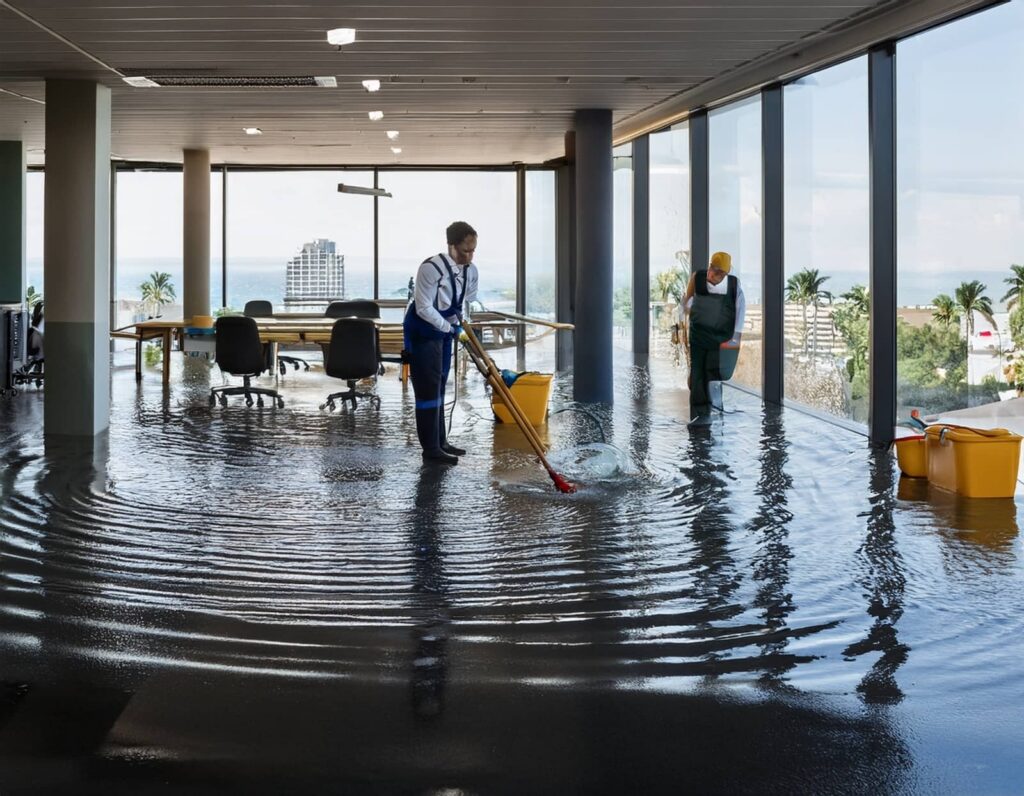
Once the damage is mapped, restoration crews move quickly to remove standing water and begin controlled drying. You’ll usually see high-capacity pumps, truck-mounted extractors, and weighted vacuums used to pull water from floors, carpets, and cavities.
After bulk removal, technicians place air movers to accelerate evaporation and dehumidifiers to capture moisture from the air. They monitor humidity, temperature, and surface moisture so you get a steady, controlled drying curve instead of hidden trapped water.
In larger business spaces, they may isolate affected zones with containment to protect normal operations. You stay informed through moisture logs and equipment checks, which help confirm progress and prevent secondary damage.
This disciplined process helps your property dry efficiently, so your team can regain a safe, workable space sooner.
Cleaning, Sanitizing, and Odor Removal
After drying is complete, technicians clean affected surfaces and contents to remove dirt, residues, and contamination left behind by water intrusion.
You’ll see them use appropriate detergents, wiping tools, and controlled agitation to lift soils without damaging finishes or equipment.
They then apply EPA-registered sanitizers to reduce harmful microorganisms on hard, nonporous materials.
For porous items, they assess whether cleaning alone will restore safe use or whether disposal is the better option.
Odor removal follows with air filtration, deodorizing agents, and targeted treatment of affected materials and cavities.
This process helps your property feel professional, usable, and ready for staff and customers again.
Preventing Mold After Water Intrusion
To prevent mold after water intrusion, technicians must remove moisture quickly and verify that materials are fully dry before reconstruction begins.
You should isolate affected areas, open cavities, and run commercial dehumidifiers and air movers until readings confirm safe conditions.
Crews need to inspect drywall, insulation, carpet, and framing for hidden saturation, because trapped moisture can support fungal growth within days.
You’ll also benefit from cleaning nonporous surfaces and applying approved antimicrobial treatments where needed.
Keep indoor humidity controlled and maintain airflow during drying so your property returns to a stable, healthy state.
When you work with a restoration team that follows moisture mapping and documentation protocols, you protect your building, your staff, and your customers from avoidable mold risk.
Working With Insurance on Your Claim
As your restoration team documents moisture readings, damaged materials, and drying progress, that record also helps support your insurance claim. You should notify your carrier quickly, then share photos, loss dates, source details, and mitigation logs.
Your adjuster can then verify the scope and approve work faster. Keep every invoice, emergency service report, and communication thread in one file so you can answer questions without delays.
You’ll also want to ask which forms, deadlines, and preferred vendors apply to your policy. When you stay organized, you help your insurer move efficiently and you protect your business’s recovery timeline.
Your restoration partner can speak the same technical language, so your team, your adjuster, and your staff stay aligned and confident throughout the claim process.
Repairing Floors, Walls, and Equipment
Once drying and demolition are complete, your team can start rebuilding floors, walls, and equipment areas with confidence. You’ll replace damaged subflooring, install approved underlayment, and match finish materials to restore safe traffic flow.
For walls, you’ll patch framing, hang new drywall, seal joints, and repaint with moisture-resistant coatings where needed.
Around equipment, you’ll inspect bases, casings, wiring, and mounts, then clean, dry, and test each unit before bringing it back online.
You should document every repair, verify code compliance, and confirm that humidity stays within target levels. This step helps your facility feel whole again and keeps your crew working in a space that supports performance, safety, and shared standards.
How to Choose a Commercial Restoration Company
After repairs are underway, you still need the right partner to finish the job correctly.
Choose a commercial restoration company with 24/7 response, documented water extraction protocols, and certified technicians who understand business operations.
You should verify IICRC credentials, insurance coverage, and experience with your property type, whether office, retail, or industrial.
Ask how they monitor moisture, control microbial risk, and protect assets during drying.
A strong team gives you clear scope, timelines, and daily updates, so you stay informed and supported.
Review references from businesses like yours and confirm they coordinate with your insurer.
The best provider works as part of your team, respects your schedule, and restores safe, usable space fast.
Frequently Asked Questions
How Long Does Commercial Water Damage Restoration Usually Take?
Usually, you’ll see commercial water damage restoration take 3 to 7 days for drying and cleaning, but severe structural damage can extend it to weeks. You should expect faster recovery with immediate response.
Can Business Operations Continue During Restoration?
Yes, you can often keep operating during restoration if you isolate affected areas, control moisture, and coordinate schedules. You’ll need clear safety zones, temporary access changes, and ongoing communication to minimize disruption and protect staff.
Is Contents Restoration Possible After Water Damage?
Yes, you can often restore contents after water damage; it’s a mountain of relief. You’ll document items, dry them, clean them, deodorize them, and salvage what you can before deciding replacement.
What Certifications Should Restoration Technicians Have?
You should look for IICRC certification, especially WRT, ASD, and AMRT, plus OSHA safety training. You’ll want technicians who’re bonded, insured, and trained in mold awareness, moisture mapping, and structural drying procedures.
How Can Businesses Reduce Future Water Damage Risks?
Like a shield, you can reduce risks by inspecting plumbing, maintaining roofs, clearing drains, monitoring humidity, installing leak sensors, and training staff. You’ll protect your property, strengthen your team, and prevent costly disruptions.
To Sum Up
When water hits your business, the clock starts immediately and that’s no coincidence; the faster you act, the less disruption you face. You shut down the source, protect the site, and bring in certified pros who assess damage, dry hidden moisture, and stop mold before it starts. By coordinating with your insurer and restoration team, you get your property back in shape, keep operations moving, and turn a crisis into a controlled recovery.