
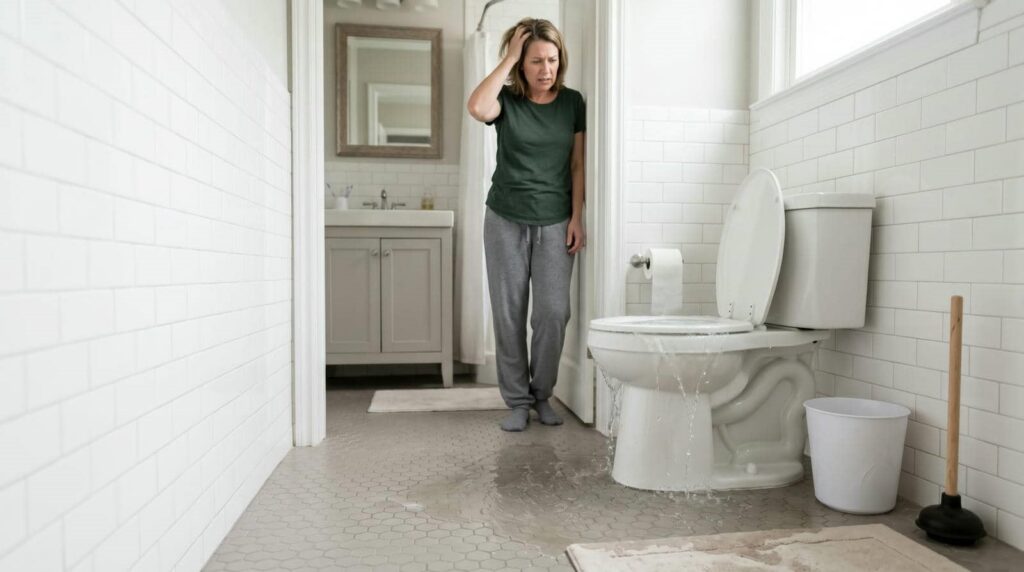
A toilet overflow can expose you to sewage, bacteria, and hidden water damage, so you need to act fast and methodically. First, shut off the water and cut power to the affected area if needed. Then suit up, contain the spread, and remove standing water before you disinfect anything. What you do next determines whether you stop a cleanup problem or create a bigger one.
Key Takeaways
- Shut off the toilet water supply, cut bathroom power, and keep everyone out of the contaminated area.
- Wear gloves, boots, eye protection, and a mask before touching sewage-contaminated surfaces or items.
- Remove standing water, contaminated debris, and soaked porous materials, then dispose of them safely.
- Clean and disinfect all affected hard surfaces with an EPA-registered disinfectant, keeping proper wet contact time.
- Dry the room quickly with fans and dehumidifiers, and call professionals if sewage reached carpets, drywall, or insulation.
Is a Toilet Overflow Dangerous?
Yes, a toilet overflow can be dangerous because it may spread contaminated water beyond the bowl and onto floors, walls, and nearby materials. You’re dealing with possible sewage exposure, so treat the area as unsanitary right away.
If the water reaches porous items, it can soak in fast and raise the risk of bacteria, viruses, and odors. You may also see staining, swelling, and hidden damage under baseboards or flooring.
In toilet overflow sewage cleanup, you need to assess how far the water moved and what materials it touched. If the overflow contains waste, stays for more than a short time, or affects carpet, drywall, or insulation, you’ll likely need professional help.
Acting quickly helps you protect your space and keep your home safe.
Stop the Overflow and Cut Power
Shut off the toilet’s water supply valve immediately to stop the overflow, and if you can’t reach it, turn off the main water supply.
Next, cut power to the affected bathroom at the breaker if water has reached outlets, baseboards, or any electrical device.
If the breaker panel is in a dry, accessible location, switch off only the circuit serving the bathroom; otherwise, shut off the main breaker and call a licensed electrician.
Don’t touch wet switches, cords, or appliances.
Keep others out of the area and make sure no one flushes or runs nearby fixtures.
Your quick action protects your home and helps your cleanup team start with a safer, controlled space.
Protect Yourself Before Cleaning
Before you clean up any toilet overflow, put on waterproof gloves, rubber boots, and eye protection, and if you expect sewage contact, add a mask or respirator rated for contaminated conditions.
Use long sleeves, long pants, and a waterproof apron if you’ve got one. Keep your skin covered to reduce exposure to bacteria, viruses, and chemicals.
Remove jewelry and tie back hair so you can work without snagging or contamination. Check your gear for tears before you start; replace damaged items immediately.
Wash your hands after you suit up, and keep clean supplies separate from contaminated tools. If you feel unsure, slow down and follow the same safe process your crew would use.
Protecting yourself first keeps the work controlled and helps your household stay safe.
Remove Sewage and Standing Water
Use a wet/dry vacuum or absorbent towels to extract the standing water, working from the edges toward the drain point.
Remove any contaminated debris, including soaked paper, rugs, and porous items that can’t be fully cleaned.
Then sanitize all affected surfaces with an appropriate disinfectant and let them dry completely.
Extract Standing Water
Start by extracting the standing water and sewage as quickly as possible with a wet vacuum, pump, or professional extraction equipment. You’ll reduce saturation and limit contamination spread when you work from the perimeter toward the center.
Keep hoses low and maintain steady suction so you don’t stir up solids or aerosols. Use personal protective equipment and isolate the area before you begin.
- Remove water until the floor is visibly clear.
- Check carpet padding, seams, and edges for hidden liquid.
- Empty equipment safely to avoid recontamination.
- Verify the surface is dry enough for the next step.
If water keeps returning, pause and reassess the source. You’re protecting your space and the people who share it.
Prompt extraction helps the crew restore your home with confidence.
Remove Contaminated Debris
Once the standing water is out, remove all visible sewage, sludge, and contaminated debris from the floor, fixtures, and any affected porous materials.
Use disposable tools and heavy-duty bags, and keep each load sealed as you work. You’ll need to lift out soaked paper, fabric, insulation, and loose solids before they break down further.
Work methodically from the outer edges toward the source so you don’t spread waste into clean areas. If items can’t be cleaned or dried promptly, set them aside for disposal.
Wear gloves, boots, eye protection, and a mask, and replace any contaminated protective gear right away.
Keep traffic out of the room, and maintain a clear path to your waste container. Dispose of debris according to local sewage rules.
Sanitize Affected Surfaces
After removing debris, sanitize all affected hard surfaces with a cleaner or disinfectant approved for sewage cleanup, and keep the area visibly wet for the product’s required contact time. You’ll protect your household when you work methodically and don’t rush.
Clean from the least contaminated area toward the most contaminated area.
Use disposable cloths, mops, or brushes, then discard them safely.
Rinse only if the product label requires it.
Dry surfaces with ventilation or clean towels after disinfection.
Wipe walls, floors, baseboards, fixtures, and any nonporous items that contacted sewage.
If water soaked into drywall, insulation, or wood, the material may need removal.
Wear gloves and eye protection, and wash hands after cleanup.
If contamination spread widely, call a professional so you’re not handling hidden risk alone.
Disinfect the Toilet Overflow Area
Disinfect all contact surfaces with an EPA-registered cleaner after removing visible waste, and keep the required wet contact time.
Sanitize the surrounding flooring, baseboards, and any splash zones to reduce residual contamination.
Then apply an antimicrobial treatment to the cleaned area to help suppress bacterial regrowth and odor.
Disinfect Contact Surfaces
Start by disinfecting every surface the overflow touched, including the toilet base, floor, nearby walls, and any fixtures within splash range. Use an EPA-registered disinfectant labeled for sewage contamination, and follow the contact time exactly. Spray or wipe each contact surface until visibly wet, then let it sit undisturbed. Wear gloves and eye protection so you stay part of a safe cleanup team.
Clean from the least soiled area to the most soiled.
Replace wipes or cloths once they look contaminated.
Reapply disinfectant if the surface dries too early.
Wash hands and tools after each pass.
Check handles, switches, and trim with care; these touch points can keep contamination active. If porous materials stayed wet, call a pro.
Sanitize Surrounding Flooring
Once the contact surfaces are disinfected, move to the surrounding flooring and treat the full overflow zone, including grout lines, seams, baseboards, and any cracks where sewage water may have spread.
You should work from the cleanest edge toward the most contaminated area, so you don’t track residue farther out. Saturate the floor surface with the approved disinfecting solution and keep it visibly wet for the required dwell time.
Use disposable cloths or mop heads, and replace them when they soil. For textured flooring, press the solution into grooves and along boundaries. Rinse only if the product label calls for it.
After treatment, let the area dry fully, then inspect for missed spots. If the flooring still looks stained or soft, you’re likely dealing with deeper contamination.
Apply Antimicrobial Treatment
Apply an EPA-registered antimicrobial cleaner to all contaminated surfaces in the toilet overflow area, including the bowl exterior, rim, seat, base, nearby fixtures, and any hard surfaces exposed to sewage.
Let the product dwell for the labeled contact time so it can kill remaining pathogens.
Wear gloves and eye protection, and keep the area ventilated.
Wipe away residue with disposable towels, then discard them in a sealed bag.
If your team uses a spray, coat evenly without flooding seams or electrical openings.
- Clean top to bottom.
- Reapply if surfaces dry early.
- Treat grout, trim, and handles.
- Confirm no odor or visible soil remains.
Decide What to Keep or Toss
If the overflow water reached porous or absorbent items, you should usually toss them rather than try to salvage them.
Check carpets, padding, drywall, insulation, and upholstered goods first. If they stayed wet with sewage, discard them in sealed bags so your household stays protected and your cleanup team can work efficiently.
You can usually keep hard, nonporous items such as metal, glass, sealed plastic, and finished surfaces if you clean and disinfect them thoroughly.
Inspect seams, cracks, and hidden backs for contamination. If an item held odor after cleaning, or if liquid entered motors, cushions, or layered materials, replace it.
When you’re unsure, choose disposal over risk; that’s the safer call for your space, your crew, and everyone who belongs there.
Dry the Room to Prevent Mold
Dry the room as quickly as possible to limit mold growth and lingering sewage odor. Open windows, run fans, and use a dehumidifier to pull moisture from walls, floors, and air.
Remove wet textiles and place them where they can dry fully. Wipe hard surfaces after airflow starts, then keep equipment running until materials feel dry. You’re protecting your space and helping your home feel safe again.
- Move air across the entire room, not just one corner.
- Empty dehumidifier tanks often so performance stays steady.
- Lift rugs, pads, and furniture to expose trapped moisture.
- Check baseboards and hidden edges for dampness daily.
Stay methodical and keep the area dry until every surface stabilizes.
When to Call Toilet Cleanup Pros
You should call toilet cleanup pros if sewage water spread beyond the bowl, soaked porous materials, or left a strong odor.
Heavy contamination increases exposure risk, and you may need specialized disinfection and extraction tools.
If you see hidden damage signs like warped flooring, stained drywall, or recurring odor, stop cleanup and get a professional inspection.
Heavy Contamination Risks
When sewage backs up into multiple surfaces, porous materials, or hidden cavities, the contamination risk rises fast and cleanup needs professional intervention. You’re dealing with biohazard exposure, not a simple spill, so act like a team that protects one another.
Stop foot traffic and isolate the area.
Wear gloves, boots, and eye protection.
Remove only nonporous items you can disinfect.
Call pros if sewage touched carpet, drywall, or insulation.
If wastewater reaches baseboards, vents, or subfloor seams, you need specialized extraction and sanitizing.
Professionals use containment, antimicrobial treatment, and moisture mapping to reduce spread. You’ll keep your space safer by treating heavy contamination as a health event, not a routine mess, and by getting help before cleanup becomes a larger loss.
Hidden Damage Signs
Even if the visible spill seems small, hidden damage can make cleanup a pro job. You should inspect baseboards, subfloor seams, and wall edges for swelling, staining, or soft spots.
If water reached carpet pad, underlayment, or HVAC vents, contamination may have spread beyond what you can see. Check for persistent odor after surface drying; that usually means sewage remains in porous materials.
Watch for warped tile, lifted vinyl, bubbling paint, or damp insulation. If the overflow sat longer than an hour, or touched outlets, cabinets, or adjacent rooms, call cleanup pros.
They’ll test moisture, remove contaminated materials, and disinfect the structure. Acting fast helps you protect your space, your crew, and your home’s recovery.
Repair Sewage-Damaged Floors and Walls
Start repairs only after the affected area is fully dry and disinfected, because sewage can weaken flooring, drywall, and baseboards while leaving hidden contamination behind.
You’ll then inspect each surface for soft spots, swelling, stains, and delamination. Remove damaged material down to sound edges, and cut back drywall at least 12 inches above the highest contamination line.
Replace subflooring, insulation, and trim that won’t hold shape or clean properly. Use moisture-resistant products where code allows.
- Wear gloves, eye protection, and a respirator.
- Bag debris before you carry it out.
- Seal seams with approved compound.
- Prime and finish repaired surfaces after verification.
You’re rebuilding a safe, solid space for everyone who lives there.
Prevent the Next Toilet Backup
To prevent another toilet backup, you’ll need to reduce strain on the drain line and keep foreign material out of the bowl. Flush only human waste and toilet paper; place wipes, hygiene products, floss, paper towels, and grease in the trash.
Inspect the tank fill, flapper, and chain so the toilet refills and seals correctly. Keep the drain vent clear, and use a plunger at the first sign of slow flow.
If backups recur, have a licensed plumber check the trap, branch line, and main sewer for root intrusion, sagging, or partial blockage. Test other fixtures for slow drainage, then schedule maintenance before a failure spreads.
Your household can stay safe and connected by treating the system early, consistently, and with care.
Frequently Asked Questions
How Long Does Sewage Odor Usually Linger After Cleanup?
Sewage odor usually lingers 1–3 days after cleanup, but you’ll smell it longer if porous materials stayed wet. You should ventilate, dry quickly, and remove contaminated items; persistent odor means hidden contamination needs professional remediation.
Can Toilet Overflow Damage HVAC or Air Ducts?
Absolutely—yes, you can damage HVAC or air ducts if overflow water reaches vents. You should shut the system off, inspect for contamination, clean and dry ducting, and call pros if odor, moisture, or mold persists.
What Insurance Details Matter for Sewage Cleanup Claims?
You’ll want your policy type, deductible, sewage endorsement, sudden-loss wording, exclusions, limits, and documentation. You should photograph damage, save receipts, and report quickly. Your adjuster’ll need dates, cause, scope, and cleanup estimates.
How Do Professionals Test for Hidden Contamination?
Like a detective, you’ll use moisture meters, ATP swabs, air sampling, and infrared scans to find hidden contamination. You’ll map affected materials, test surfaces, and confirm clearance so everyone can feel safe again.
Will Sewer Backup Risks Differ With Septic Versus City Systems?
Yes—you’ll face different backup risks. Septic failures usually stem from tank, drainfield, or pump issues; city backups often involve mainline blockages or surges. You should inspect source, isolate hazards, and document damage fast.
To Sum Up
When your toilet overflows, act fast: stop the water, shut off power if needed, wear PPE, remove sewage, disinfect hard surfaces, and dry the area completely. For example, if a basement toilet backs up after a clog, you should isolate the room, extract contaminated water, and monitor moisture daily to prevent mold. If damage is widespread or sewage entered walls, call pros before you rebuild. Prevention starts with proper maintenance and safe flushing habits.